Category: Compliances

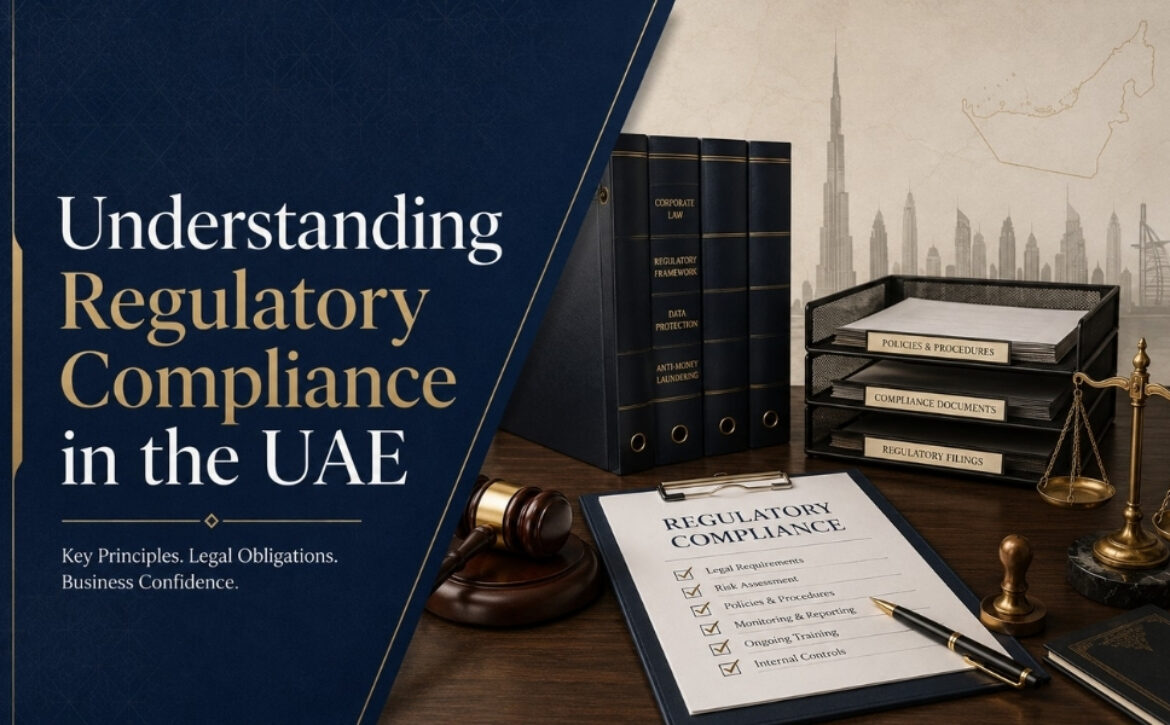
Understanding Regulatory Compliance in the UAE

Understanding Regulatory Compliance in the UAE

The understanding of Regulatory Compliance in the UAE makes businesses ethical in a fast-paced commercial world. Companies from virtually every large industry turn to the UAE to establish themselves. As a result, businesses are required to have an understanding of the rules under which they operate.

Good compliance practices shield businesses from legal, financial, and reputational penalties. Furthermore, compliance develops the ties between customers, investors, regulators, and business partners.

Businesses should approach compliance as a continuous business obligation. Therefore, regular checks and consulting services would lead to continuous progress.

Reasons Why Understanding Regulatory Compliance in the UAE Matters

Understanding Regulatory Compliance in the UAE begins with realizing its significance for business sustainability. Regulations serve as the source of clear principles that undergo responsible implementation in the business world.

Businesses must follow such requirements as those related to employment, taxation, licensing, financial reporting, and data protection. Moreover, certain industries may have additional rules related to compliance.

A good compliance system helps to know an obligation long before a business faces serious risks that exist for its functioning.

Important Areas of Compliance

In the UAE, businesses need to analyze various regulatory areas in order to get a specific understanding of regulatory compliance. It is necessary to understand the rules that apply to specific operations of companies.

Corporate tax and VAT represent significant spheres for a lot of businesses. Enterprises need to ensure compliance with the accounting standards and obligations.

In addition, companies should comply with the licensing procedures that are demanded by business activities. Also, it is essential to check the requirements regarding employment and migration issues. Anti-money laundering regulations are applicable for some types of business. Therefore, it is necessary to implement appropriate controls and reporting procedures.

Tax compliance is an important aspect of understanding regulatory compliance in the UAE. Companies need to know what corporate tax and VAT obligations apply to them.

Good bookkeeping is essential for accurate tax calculations and returns. This means businesses should keep their invoices, expenses, bank statements, and supporting documentation in an orderly manner. Companies also need to pay close attention to filing deadlines. Missing deadlines can lead to excess penalties and problems with administration.

Finally, businesses need to routinely review their taxes periodically. This gives managers a chance to identify mistakes before they submit their tax filings.

Keeping Proper Financial Records

In order to understand Regulatory Compliance in the UAE, good management of financial records is crucial. These records serve as proof for tax submissions and audits. Companies need to keep records of their transactions during the year. Moreover, regular reconciliations enable teams to catch discrepancies early. Digital accounting systems can improve the accuracy and efficiency of reporting. They also provide managers with better insights into financial processes. Nonetheless, companies have to ensure that they set mechanisms for restricting access to financial systems. Strong restrictions can protect confidential information and minimize unauthorized modifications.

Corporate Governance and Internal Controls

Corporate governance enhances the role of Regulatory Compliance in the UAE by promoting accountability. The management needs to allocate functions to different departments. Internal controls are instruments that help companies cut losses from errors, fraud, and unauthorized transactions. Therefore, companies need to put in place processes for approvals and reporting. Regular checks performed by the management are an additional enhancement of adequate financial supervision. Companies can use such checks to find weaknesses in their operations.

In addition, clear policies make the responsibilities of the employees clear to them. Thus, a compliance culture can be enhanced within the company.

Management of Compliance Risks

The comprehension of Regulatory Compliance in the UAE necessitates an ongoing assessment of risks. Regulatory risks may vary as companies evolve and enter new realms of operation. Organizations need to recognize high-risk options and appraise currently existing control measures. Then, management must determine what needs fixing. Compliance reviews put weaknesses on record before the regulators can reveal them. Thus, managing risks in advance can cut down on financial and operational problems. Companies also need to be aware of what is happening in the regulatory world.

The Importance of Technology for Compliance

Increasingly, technology is aiding companies in their understanding of regulatory compliance in the UAE. Modern systems automate the processes of reporting, evidence management, and deadline monitoring. Automation minimizes repetitive administrative work as well as improves accuracy levels. Moreover, modern management systems help track the companies’ compliance actions. The companies can also rely on secure document management systems for important evidence. These systems make retrieval of the documents easy during audits and compliance audits.

On the other hand, technology needs serious management. Businesses need to ensure data security, implement access control, and regularly check cybersecurity measures in their organizations.

Training of Employees and Culture of Compliance

The compliance performance of an organization is highly impacted by the actions of employees. Thus, organizations must conduct periodic training on applicable policies and compliance obligations. Training helps employees identify possible risks and take necessary measures to minimize them. Moreover, good communication minimizes the chances of misunderstandings within the organization. Management should provide incentives to the employees to report any issues or concerns using proper channels. This practice allows for the identification of issues beforehand.

Moreover, the management should also show the example of correct behavior, as strong management influences the attitude of employees towards compliance.

Professional Help for Regulatory Compliance

Regulatory Compliance in the UAE can be difficult due to constantly changing rules. Advisory professionals can help companies interpret the complicated rules. Accountants and compliance specialists can evaluate the company’s report preparation systems and processes. They can identify weaknesses and recommend constructive solutions. Likewise, with the help of the professionals, it becomes easier to ensure tax compliance and prepare for audits. It gives the management more confidence in the performance of important processes.

Nevertheless, the management has to play an active role in this seemingly simple process. A company cannot fully transfer its regulatory responsibility to external advisors.

The advantages of good compliance

Good compliance provides advantages beyond the sole avoidance of sanctions. Organizations become more transparent, financially disciplined, and trusted by stakeholders. Besides, good compliance systems are valuable for expansion, M&A, and investment due diligence. Investors appreciate organizations that are responsible and financially clear. Compliance also ensures operational consistency. When employees work according to procedures, they do their work properly.

In this regard, compliance can be perceived as a competitive advantage rather than mere administrative duties.

The significance of regulatory compliance awareness in UAE businesses cannot be understated as it represents an avenue towards responsible and sustainable growth. Businesses must ensure that they remain up to speed with their tax, financial, governance and operational obligations.

Employing robust internal controls, accurate record-keeping, and necessary employee training will play a critical role in minimizing compliance risk. And, lastly, the use of advanced IT tools and relevant expert advice is crucial in ensuring regulatory preparedness.

In conclusion, businesses should integrate compliance into their day-to-day operations decisions, which will help them protect their business, enhance credibility, and assist in their long-term sustainability in the UAE.

Read More

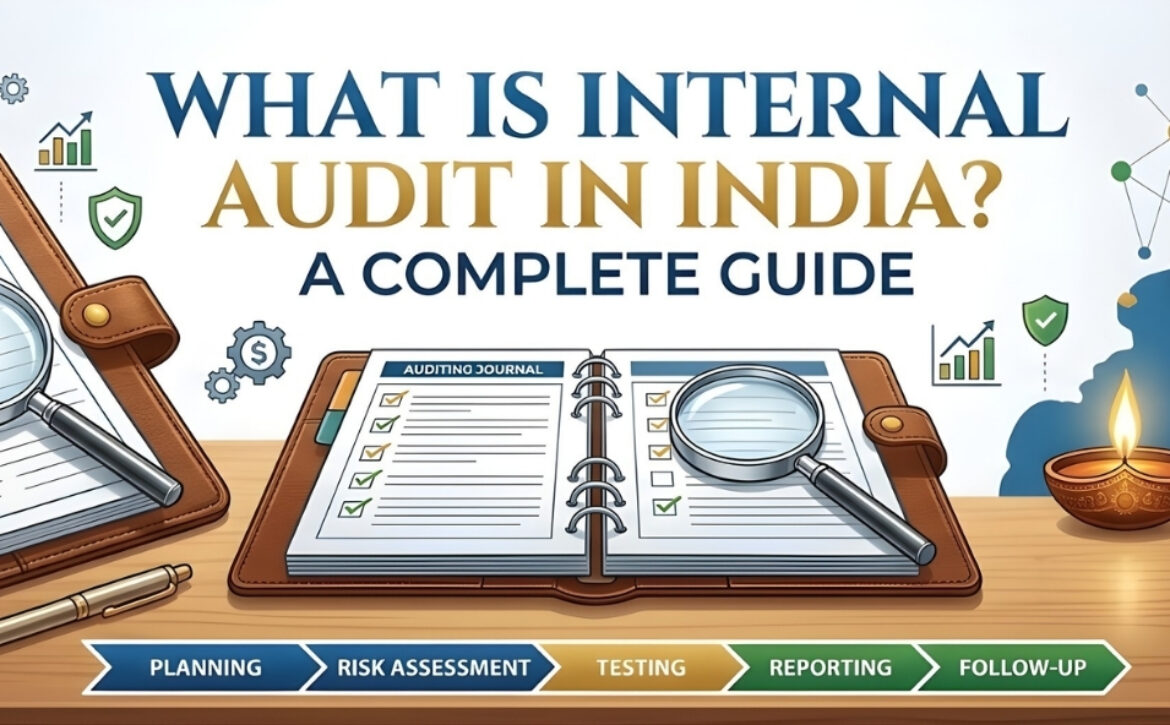
What is Internal Audit in India? A Complete Guide

What is Internal Audit in India? A Complete Guide

What is the Purpose of Internal Audit In India? Giving Insight To Organizations On Financial Control, Compliance With Regulatory Requirements And Monitoring Of Company Risk, Processes, processes, and operations will allow you to ensure that your business is transacting with confidence.

It is critical for companies to regularly assess the risks, processes, and operations of their operations. The effectiveness of having a well-defined internal audit function is to ensure that good business practices are being followed and, therefore, ensure that the organization operates efficiently and effectively.

The ability to make well-informed decisions is an essential part of an organization’s governance process.

Companies in India have significant regulatory burdens placed upon them; as such, a strong internal audit function plays an important role in ensuring compliance and control.

The first thing you will need to know when learning about the internal audit function in India is the definition of the purpose of an internal audit. The internal audit function is responsible for evaluating the internal controls and processes of an organization and conducting periodic reviews of the organization’s financial and operational activities for the purpose of determining whether all aspects of the business are functioning as intended.

The internal audit function identifies areas where an organization can improve its operations through increased efficiency and improved controls, and, as such, an organization is better positioned to maintain an effective governance structure.

Internal Audit (IA) In India: Objectives

As previously mentioned, the key objectives of the internal audit function include:

  • To assist organizations in complying with the laws and regulations that impact their respective business operations.
  • To ensure the organization is aware of the accuracy and completeness of its financial records.

The internal audit department performs a review of the risk management processes in place on a company’s operations, evaluates the adequacy of the internal control system, and evaluates the operational efficiency achieved for the purpose of evaluating the company’s overall performance and accountability.

Advantages of an Internal Audit

There are numerous advantages provided by the Internal Audit in India. For one, it provides improved internal controls and operational efficiency; hence, businesses will reduce their exposure to errors and risk. Additionally, it increases financial transparency and the accuracy of financial reports, as well as improves compliance with regulations. All these things will enable an organisation to achieve sustainable growth.

Technology’s Role in an Internal Audit

The impact of technology on Internal Audit in India. Digital solutions help to streamline the entire process of accounting and auditing, as well as providing greater accuracy and efficiency among auditors. Automation will greatly reduce the number of manual errors arising from an audit. By using advanced data analytics, auditors can quickly and easily identify any patterns or risks that exist within the organisation; thus, maximising the overall effectiveness of the audit.

Challenges

The common challenges that exist when using Internal Audit in India are discussed within it. All businesses are currently faced with a highly complex regulatory environment due to rapid regulatory change, therefore requiring constant vigilance by businesses to ensure compliance. Also, limited resources have an adverse effect on the overall effectiveness of their audit processes. Furthermore, the lack of expertise can result in incomplete audits; thus, professional assistance is essential.

The Guide for Internal Auditors in India provides a clear direction for organizations wishing to improve their internal auditing processes and systems through risk-based and strategic approaches. As companies begin to implement these approaches, they will begin to realize significant benefits from their internal audit function, including the ability to assess and mitigate risk, maximize business efficiencies, and ensure compliance with laws and regulations.

Internal Auditing will continue to evolve with trends such as the increasing use of artificial intelligence and cloud computing, as well as the ability of companies to utilize the Internet to support their business processes. As a result, organizations will begin to focus on using internal auditors to help improve the company’s overall strategic direction and provide a key component of its infrastructure.

The Guide for Internal Auditors in India provides an excellent foundation to help organizations start their internal auditing process and will remain a valuable resource to help organizations continue to successfully implement and maintain effective internal auditing processes and systems.

Read More

Dubai Fraud Risks in 2026

Dubai Fraud Risks in 2026

The Dubai fraud risks in 2026 will only grow as the demand for business and commerce increases. As the world has become digital and can now trade globally, companies must take every action necessary to protect themselves from financial crime. Therefore, the company must reinforce its defences before the potential risk increases.

Many companies continue to attract worldwide investors and entrepreneurs; however, fraud continues to evolve as the companies innovate. Therefore, every company needs to be proactive in protecting itself from possible fraud.

Understanding the Dubai Fraud Risks in 2026 can provide valuable information to the business community as the economy and technology continue to evolve. Cyber fraud is targeted toward payment systems and customer data. Likewise, the internal fraud threat to accounting accuracy and asset security is increasing.

In addition, due to the increase in cross-border transactions, the regulatory complexity has increased. The fraudster is also taking advantage of weak controls and outdated systems; therefore, the level of awareness and knowledge of the company remains the best defence.

Dubai Fraud Risks in 2026: Why does it make sense?

Reputation and financial stability are negatively impacted by Dubai Fraud Risks in 2026. Loss of confidence in a company damages relationships with investors, clients, and regulatory authorities. Therefore, it is essential to take measures to prevent such a loss to the company so that the company can maintain both revenue and credibility.

Furthermore, there is an increasing trend of regulatory penalties across all industries. Regulatory authorities are expecting to see companies have strong internal controls and report promptly; therefore, compliance and fraud prevention must work closely together.

Fraud Types that are Common in 2026

In 2026, the fraud risks in Dubai are Cyberfraud and Identity Theft. Hackers have targeted Online Banking Platforms as well as Payment Gateways. Due to this, companies must ensure that their Digital Infrastructure has been sufficiently secured. Continuing to increase across all Industries is the incidence of Procurement Fraud. Fraud can occur when employees manipulate Vendor Payments and Contracts.
The implementation of Strong Segregation of Duties will greatly reduce the opportunity for employees to perpetrate these kinds of Fraud.

The threat of Financial Statement Fraud also threatens the integrity of Financial Reporting. False Revenue Recognition can mislead Investors and Lenders. To identify potential for these kinds of problems, Regular Audits should be performed.

The Use of Technology to Prevent Fraud

Dubai Fraud Risks in 2026 will be addressed, in part, through the use of Advanced Detection Systems. Artificial Intelligence can now Analyze Unusual Patterns in Transactions Online. Consequently, Companies will have to invest in Smart Monitoring Tools.

Automation eliminates Manual Error and reduces the Delay in Processing Transactions. Real-Time Alerts allow companies to Respond More Quickly to Suspicion of Fraud. As a result, Technology will provide a Critical Defense Against Fraud.

Importance of Internal Controls

Dubai Fraud Risks in 2026 will highlight the weaknesses in poorly controlled systems. Well Spelled Out Internal Policies Prevent Unauthorized Access and Misuse of the Company’s Assets.
Management of Companies Must Regularly Assess the Effectiveness of Internal Controls.

Approval Workflow and Multiple Sources of Signatures Provide for the Protection Against One Person Having Authority to Authorise Transactions Without Additional Approval. Well Written Documentation Provides for Further Accountability and Traceability. As a Result, Internal Controls Discourage Fraud.

Employee Awareness and Training

Dubai Fraud Risks in 2026 will increase when Employees are Unaware of how to Protect Themselves Against Fraud. Fraudsters will exploit the Human Element and Trust. Therefore, Ongoing Training Programs for Employees are Essential.

Workshops are regularly held to assist in the identification of potential fraud activity.
By having a clear reporting mechanism, staff are encouraged to report such instances before they become large-scale.

As a result, every member of Staff has now become an active participant against fraud.

Dubai Fraud Risks in 2026: The Role and Importance of Forensic Accounting

In 2026, because of the complexity of the fraud risks in Dubai, there will be a need for trained forensic accountants to investigate. Due to the evolution and sophistication of fraud in 2026 in Dubai, forensic accountants will be required to perform an analysis of the complexity of each financial transaction, as well as to follow the electronic trails left by those fraudsters. Through the use of such forensics, fraudsters will be exposed, and the loss of assets will be recovered.

The work done through forensic reviews also helps develop future control processes and procedures. Additionally, the use of forensics will support the legal process and also support compliance with the regulatory environment.

The Strategic Use of Forensic Services

With continued increases in regulatory expectations for Compliance programs in 2026, as they pertain to Dubai fraud risks, there will be scrutiny on them. Regulatory authorities are asking for increased transparency in reporting and governance. In order for Compliance programs to remain viable, they will need to adapt to evolving needs.

New Anti-Money Laundering regulations require an enhanced verification of customers versus the old requirement of simply knowing their identity. Compliance programs must also continue to report any suspicious transactions. Regulatory compliance will provide a level of protection from being sanctioned.

Creating an Environment That Is Resistant To Fraud

With Dubai’s Risk of Fraud in 2026, leadership must have a strong commitment to fostering a strong Corporate Culture. Ethical Leadership sets an example within an organisation.
Management must openly promote integrity. Organisations need reward systems that promote honesty, accountability, and strong zero-tolerance policies to effectively help deter misconduct.
As a result, organisations can use Corporate Culture as the best defence against Fraud.

How To Prepare Your Business For Dubai’s Fraud Risks In 2026

Dubai’s Risk of Fraud in 2026 requires a proactive Risk Assessment Approach. Organisations should conduct annual Vulnerability Reviews of their organisations. Detecting problems early saves money and helps maintain a good reputation.

Hiring Professional Advisors to assist with Fraud Prevention Strategies. Conducting External Audits provides independence to verify your Fraud Prevention Controls and Procedures. By preparing your Organisation for Dubai’s Risk of Fraud in 2026, the potential for long-term loss will be diminished.

Dubai’s Risk of Fraud in 2026 creates significant hurdles for building companies, but having Robust Controls, Technology and Training in Place has the potential to Limit Fraud Exposure to a Degree. Planning will help protect Assets and Goodwill. Companies Preparing Today Will Continue to Thrive Tomorrow. Ultimately, Awareness and Proactive Prevention Will Determine the Security of Businesses in 2026.

Read More

Entrepreneur Finance Essentials

Starting a business and growing a business in Dubai can be thrilling yet challenging, especially when it comes to financial management. Many entrepreneurs have great ideas but struggle to find their way through taxes, compliance, and financial planning. Small and medium enterprises (SMEs) make up the foundation for Dubai’s economy, but also work against the continual pressure to maintain competitiveness, cost, and stakeholder investment for Entrepreneur Finance Essentials

This is where entrepreneur- and SME-focused topics can play a significant role. By concentrating on matters directly impacting startups and SMEs, Chartered Accountants (CAs) in Dubai can provide really useful support beyond compliance. Rather than just providing the reports, CAs can help entrepreneurs get a better understanding of the situation by presenting options in a format that is more effectively-easily interpreted and comprehended. For example, CAs can help entrepreneurs make intelligent decisions, avoid mistakes, and plan for the future.Entrepreneur Finance Essentials

Why Entrepreneur Finance Essentials are important?

Small and medium enterprises (SMEs) account for more than 90% of all businesses in Dubai. They provide employment, are drivers of innovation, and keep the economy moving forward. However, unlike large corporations, SMEs do not always have large finance teams and don’t typically hire consultants. Entrepreneurs may wear the hats of CEO, marketing manager, and perhaps even accountant. That is why Entrepreneur & SME-Focused Topics are so important. They offer small businesses information relevant to them at their stage of development. For example:

  • How should a startup be thinking about VAT when the majority of its clients are overseas?
  • How should SMEs think about cash flow when revenue is seasonal?
  • How do SMEs source investment when they have virtually no historical financial record?

These are not hypothetical problems; they are challenges faced by business owners on any given day. A CA that specializes in working with entrepreneurs will be able to provide answers that lower costs, reduce risks, and improve investor confidence.

Common Financial Blunders Made by SMEs

One thing I noticed when looking at Entrepreneur & SME-Focused Topics is the financial blunders that small businesses make. Many startups fail not because the idea is bad, but simply because they mishandle their finances. Recommendations are full of examples – Some of the common ones that I seeded included:

  • Mixing personal and business finances – This makes it impossible to determine true profitability, and makes audits a headache.
  • Overlooking cash flow – Cash can run dry even for profitable businesses while waiting for clients to pay, or longer-term issues like credit availability. Constantly Failing to Monitor Financials: If a business isn’t reviewing monthly, quarterly, or annually, it’s walking away from early indicators of potential problems.
  • Ignoring Heads Up About Taxes – Many SMEs in Dubai are not prepared for obligations such as VAT and corporate deadlines of tax deadlines.
  • Shunning Professional Advice: There are SME owners who think they can manage the accounting and bookkeeping tasks on their own. This appears cost-effective and reasonable, but generally ends up costing more in the long run.

As CAs focus on Entrepreneur & SME-Focused Topics, the objective will be to steer businesses from these traps and provide practical ideas and tactics leading toward stability. CAs Add Value to Entrepreneurs & SMEs. Business owners typically categorize accountants as tax advisors, and then often overlook the additional value a modern CA can provide.

  • Cash Flow Management: Help plan their payments, collections, and how to best finance their needs.
  • Business Structure Advice: Guide how to structure their operations, such as an LLC, Free Zone, or Mainland, and the implications of each to minimize tax and compliance costs.
  • Assisting in Fundraising: Prepare and present investor-ready financial statements and projections when delivering pitches to prospective investors.
  • Delivering Tax Planning Strategies: Particularly ensuring management knows how to tackle VAT and corporate tax so they can keep penalties at bay.
  • Virtual CFO: Providing startups access to a higher level of strategic financial support without needing to hire full-time.

In summary, accountants are no longer just a documentation person; they are a key partner leading to business growth. Real Life Examples of Entrepreneur & SME-Focused Topics.Entrepreneur Finance Essentials

Now let’s examine these services in real life:

1. A Tech Startup Looking for Capital

A startup that was developing mobile apps based in Dubai wanted to attract investors, but had not put in place the financial reporting system needed. A CA that focused on Entrepreneur & SME-Focused Topics helped them do the following:

  • Develop financial models to demonstrate future revenue.
  • Develop reports that potential investors would appreciate
  • Develop a mechanism to track upside and cash burn.

Within 6 months, the startup had attracted funding.

2. A Retail SME with VAT Issues

A retail SME importing more than one merchandise into the UAE was muddled about being able to comply with the numerous obligations of VAT on importation and exportation. With advisory support, the SME was able to do the following:

  • Correctly register for VAT.
  • Comply with registration, invoice, and return obligations with no monetary penalties.
  • Improve working capital when reclaiming input VAT eligible for reclamation.

3. A Family Business Moving Toward Professionalism with a Financial Reporting System

A family business operating continuously for 20 years planned for corporate-style financial governance. A CA helped them do the following:

  • Separate personal accounts from business accounts.
  • Develop professional reporting for financial transparency.
  • Plan for succession and inheritance in a more structured manner. These examples illustrate the importance of Entrepreneur & SME-Focused Topics—they address real issues facing everyday businesses.

Benefits to Entrepreneurs: Finance Essentials

When a small business collaborates with CAs with a focus on Entrepreneur & SME-Focused Topic, they receive a variety of benefits:

  • Peace of Mind: Compliance is managed with competency.
  • Cost Savings: Smart tax planning will minimize liabilities.
  • Investor Credibility: Transparent Reporting put $ signs in investors’ eyes.
  • Time Savings: Entrepreneurs spend less time working on the books and more time working on the business.
  • Future Compliance Readiness: The business will be keeping up with regulatory compliance and market changes.

These benefits can determine whether an entrepreneur succeeds or fails when juggling competing priorities.Entrepreneur Finance Essentials

Why Now is the Time to Act?

The business climate in Dubai is rapidly changing. With the introduction of corporate tax, changing compliance checks, and increased competition, SMEs can no longer afford an informal approach to finance. The sooner in the business lifecycle a business starts to embrace Entrepreneur & SME-Focused Topics, the more prepared they will be to approach various challenges. Relying on the challenges to appear later on, which they can then deal with, is likely going to cost them much more in terms of fixing mistakes than if they remained proactive with some advisory services.

For new entrepreneurs starting from scratch with a proper financial setup gives them the best chance. For existing SMEs with an improving financial strategy, they are then putting themselves in the best position for sustainability and growth.

Being in business in the Dubai market is highly opportunity-driven driven but it also involves high risk. Entrepreneurs and SMEs constantly grapple with being compliant, having to pay taxes, getting cash flow into the business, working with the demands of having investors, and continuous competitiveness and growth.

This is why Entrepreneur & SME-Focused Topics are really important, as they offer an entrepreneur or SME the overall financial clarity and guidance all businesses need to operate. Working with a CA who understands the challenges of being a start-up or SME is beneficial understanding as you develop inside the process of building a future and you are efficiently being compliant, whilst also developing with the right strategy to grow your business model and understand your future management risks.

Ultimately, an entrepreneur or SME running their own business is about managing their money – it is not just about having an awesome product or offering. With great financial advisory services, your business can progress from surviving to thriving.

Read More

Top Compliance Services in Dubai Every Business Needs

Top Compliance Services in Dubai Every Business Needs

Dubai is considered a global hub of business activity, home to startups, SME’s and multinational enterprises—all drawn to the region’s progressive regulatory environment and tax policies. Where there is opportunity, there is responsibility and thus compliance. Slick & Sharp provides the top compliance services in Dubai that every business should know about so you can continue operating legally, hitting operational milestones, and managing a reputable business.

Why Compliance Is Crucial in Dubai

The UAE authorities continue to be active in regulating corporate entities to enhance corporate transparency, anti-money laundering (AML) activity, data privacy, and general tax compliance. Companies that are not compliant are exposing their business to a range of consequences, including but not limited to penalties, disruptions to business operations, and reputational harm. Engaging the best compliance services in Dubai that all businesses should know about will assist organizations in fulfilling their legal obligations and other requirements in a risk-managed, timely, and cost-effective manner.

Essential Compliance Services for Dubai Businesses

1. Corporate Governance Advisory

Proper governance keeps businesses in an ethical framework while remaining legally compliant. At Slick & Sharp, we have experts to develop internal frameworks that ensure businesses promote accountability and adherence to the UAE corporate codes. 

2. AML & CFT Compliance

Anti-money laundering laws are an important obligation for all businesses, so they must conduct proper due diligence and reporting. Our experts ensure the processes and transactions fully comply with AML/CFT, and it’s one of the top compliance services in Dubai that every business should know.

3. Economic Substance Regulation (ESR)

Companies engaged in specific activities must show they have substantial operations in the UAE. We assist our clients with determining the applicability of ESR, submitting notifications, and maintaining appropriate documentation.

4. Ultimate Beneficial Ownership (UBO) Reporting

Where there is no appropriate documentation, UBO and ultimate beneficial ownership will be difficult to ascertain. Maintaining accurate UBO records on entity ownership will help identify actual ownership structures. Our consultants will manage our clients’ UBO files and disclosures so that they do not face fines or regulatory scrutiny for non-compliance.

5. VAT and Tax Filing Compliance

Any errors in tax reports have the potential to result in penalties or examinations. We take care of any VAT returns and corporate compliance filing due dates to ensure that our client is fully compliant with regulations. This is one of the top compliance services in Dubai that every business needs! 

Why Choose Slick & Sharp

We ensure that we provide you with the best compliance services in Dubai that every business needs while complying with our regulatory requirements.

  • Custom solutions for the specific needs of each industry
  • Assistance with risk assessments and planning preventative measures 
  • Current updates about changing regulations 
  • A proactive compliance approach instead of a reactive one

We support clients in healthcare, finance, legal, diagnostics, and startups. Compliance in Dubai is not optional – it’s a strategic necessity.

At Slick & Sharp, we believe good compliance builds a resilient business, not just a legal safety net. We offer top compliance services in Dubai, including tax, governance, AML, and cybersecurity.

Protect your brand, your profits, and your future with Slick & Sharp – Dubai’s trusted partner in corporate compliance. 

Read More