

Importance of Bookkeeping for Small Businesses
Importance of Bookkeeping for Small Businesses
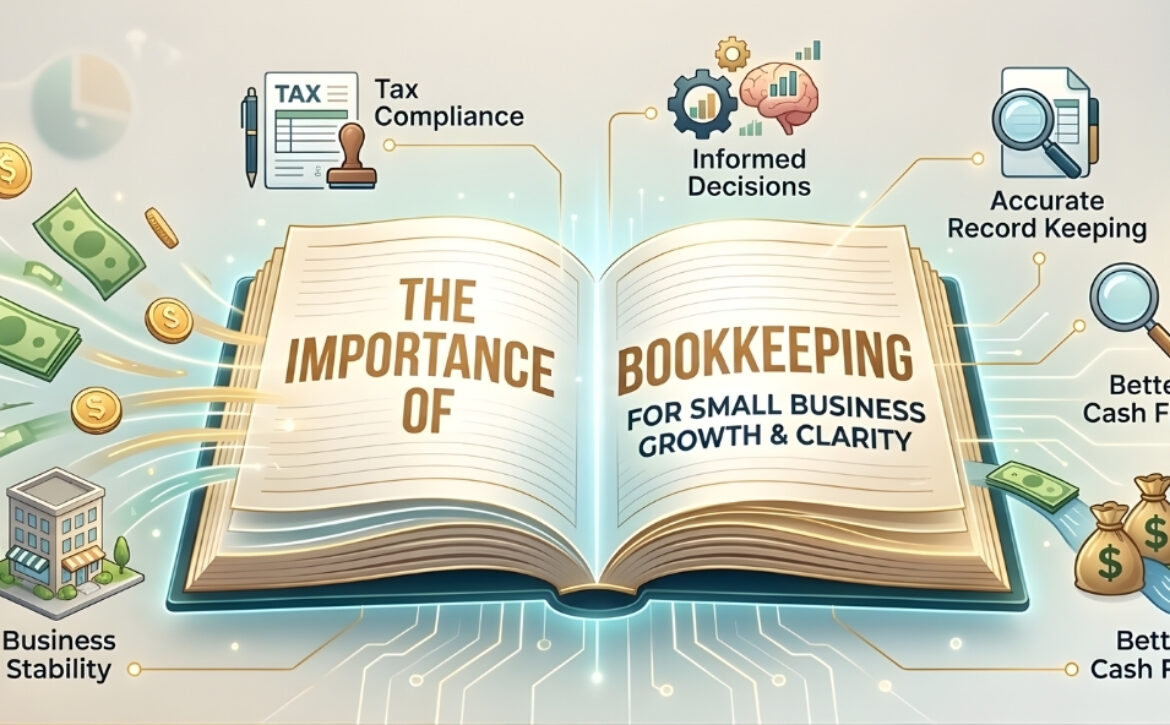
The Importance of Bookkeeping for Small Businesses is more prominent now than ever due to the competitive nature of the modern-day environment. Every firm must be able to accurately document its financial status to remain in business and continue to grow. Through bookkeeping, small business owners obtain control, clarity, and long-term financial stability. Furthermore, through bookkeeping, small business owners can make quick and informed decisions.
Understanding the Importance
Small businesses typically operate under a constrained budget and physical resources. Therefore, having established procedures for bookkeeping is imperative for managing their financial affairs effectively. The first step to understanding bookkeeping’s benefits for small businesses is establishing organized financial records.
Bookkeeping is nothing more than documenting every financial transaction that takes place in an organized manner. By systematically documenting all of a company’s transactions, a small business owner can have a comprehensive view of the company’s revenues and expenditures.
The necessity of maintaining accurate records can provide a greater level of transparency in the company’s finances. Having accurate records can assist in measuring the company’s performance over a time period, thus allowing company owners to run their businesses at their best potential to maximum efficiency.
Financial Accuracy
Bookkeeping is crucial for small businesses as it ensures accurate financial records. Errors in transactions can lead to serious issues, so a consistent bookkeeping system helps minimize discrepancies. Using good records to produce accurate and reliable financial information leads to establishing trends and patterns of cost, thereby increasing the efficiency of the day-to-day operations of the small business.
Cash Flow Management
Cash flow management has been heavily impacted by the way bookkeeping assists small businesses with their overall cash flow management. Small business owners need to monitor their incoming and outgoing cash regularly. As a result, proper bookkeeping helps keep the company in good standing financially.
When cash flow is tracked regularly through bookkeeping, it helps to keep businesses from running out of cash or having delays in making payments to suppliers or employees. Therefore, small businesses are able to maintain financial stability.
Tax Compliance
Bookkeeping plays a critical role in supporting small business owners when preparing their tax returns in a timely and accurate manner. In order for small business owners to accurately prepare their tax returns, they must use properly kept books.
Bookkeeping helps to reduce the possibility of errors when preparing tax returns by providing well-organised records that can be used for reference. Additionally, small businesses will be able to avoid penalties and threats of litigation as long as their bookkeeping records are kept properly. As a result, bookkeeping helps maintain compliance and credibility for small business owners.
Decision-Making
When it comes to making decisions, bookkeeping allows small business owners to make more informed decisions. Small business owners use financial data when developing a business plan and developing a strategy, which requires accurate financial records. Because of this, small business owners can gain valuable insights from their accurate records.
Financial reports can help small business owners identify areas that are profitable and areas that are not working, which will guide them to make more informed pricing management, budgeting, and investment decisions in the future. This will enable small businesses to achieve a greater level of success than they would have without the use of effective small business bookkeeping.
How Technology Is Helping Small Businesses Grow
The growing use of digital tools increases the importance of bookkeeping for small businesses. New accounting software greatly reduces the difficulty of doing bookkeeping tasks. This means that businesses can reduce human error and save time because they won’t be entering data manually.
Cloud-based systems allow for real-time updates to financial data. Automation allows for accurate and quick reporting. This makes financial management easier because it uses technology to help.
Reducing Financial Risk Of Bookkeeping For Small Businesses
The importance of bookkeeping for small businesses is essential in reducing the risk of financial loss. If you do not keep your records properly and accurately, you leave yourself open to potential fraud or mismanagement. So having the proper systems in place will give you the ability to be more accountable and transparent.
By having periodic reviews of your business’s financial status, you can detect errors or irregularities in your business’s financial records sooner rather than later. With the addition of internal controls to your business, you can improve your overall financial security. This, in turn, allows you to better safeguard your assets.
Growth Of Bookkeeping For Small Businesses
The importance of bookkeeping for a small business is necessary to support its long-term growth. By having accurate financial data, businesses have the ability to create an expansion plan. As a result, you will be able to allocate resources in an efficient manner. Investors and lenders will want to see accurate financial statements. When you have proper accounting records, you will increase your chances of being able to obtain funding from investors and lenders.
Outsourcing and The Need for Small Business Bookkeeping Increases With the Utilization Of Professional Assistance. An outsourced provider will decrease the amount of work you have to do while also ensuring that your work is being done correctly. Outsourcing allows you to concentrate on your main functions as a business.
Professional bookkeepers will ensure that your company is complying with all financial regulations and that your company is being properly managed financially. In addition, they will provide insight into how your company can grow, so as to ultimately be more efficient and reliable.
Small businesses rely on bookkeeping to be successful. Bookkeeping provides financial accuracy, compliance, and a way to plan. As a result, all companies should make bookkeeping a priority. Companies have a greater chance for stability and growth when they keep accurate financial records. Adequate bookkeeping lays the groundwork for a successful business long-term.