
Common Mistakes in UAE Corporate Tax Return Filing

Common Mistakes in UAE Corporate Tax Return Filing

Common mistakes in UAE Corporate Tax Return filing can lead to unnecessary compliance issues for companies. Companies in the UAE must learn about their tax responsibilities and keep correct financial papers. Filing mistakes, even minor ones, could create some issues in tax reviews. Thus, companies are advised to adopt proper practices before filing. Professional tax planning can minimize mistakes and enhance compliance.

Understanding Common Mistakes in UAE Corporate Tax Return Filing

Common Mistakes in Filing Corporate Tax Returns in the UAE are usually triggered by a lack of understanding of corporate tax requirements. Hence, businesses end up having misunderstandings regarding taxable income, deductions, filing obligations, etc. As a result, companies must examine tax rules applicable for the purpose of preparing the returns. They must also keep comprehensive records of the supporting documents for the numbers provided.

Moreover, it is important for management to ensure that the roles of tax compliance are well-defined.

Missing the Corporate Tax Filing Deadline

One of the biggest mistakes regarding filing is missing deadlines. Businesses must carefully determine their corresponding filing period early so that they can meet that deadline. Common mistakes in respect of filing corporate tax returns in the UAE include waiting until the last moment to submit documents. This increases the risk of making mistakes during preparation.

This is why businesses should prepare internal compliance calendars to ensure timely preparation and investigation into financial matters.

Reporting Incorrect Financial Information

Proper financial records constitute the basis for corporate tax return filing. Incorrect information about revenue or expenses may create compliance issues. Companies should reconcile their accounting records before they start tax calculations. This means that the information regarding income, expenses, assets, and liabilities must be verified once again. Common mistakes in respect of filing corporate tax returns in the UAE may happen due to the fact that businesses do not have comprehensive accounting records.

Mistakes in Taxable Income Calculation

Accounting profit does not always equal taxable income. There can be variations in corporate taxable income calculation because of certain adjustments. Businesses should be aware of the eligible expenses for tax purposes. It is also important to identify adjustments made to expenses before tax returns are filed. Some common issues during the filing of corporate tax returns in the UAE include inaccurate claims for tax deductions and unverified expenses. Using proper methods of tax calculation will help businesses avoid such issues. It may be useful to consult a professional for complicated transactions.

Poor Record-Keeping

Companies need to have their records in order to ensure their corporate tax return filing. If the documentation is lacking or poorly organized, it can be impossible to verify it in the course of tax audits. Thus, it is essential for companies to have invoices, contracts, financial statements, and other documents in place. Besides, companies need to do the reconciliation of the financial information from time to time. Having spotless record-keeping will ensure the ease of filing tax returns.

Disregarding Related Party Transactions

Businesses must go through related party transactions since they might require special treatment with respect to corporate tax laws. Companies must recognize their presence in the process of accounting. An example of Common Mistakes in UAE Corporate Tax Return Filing is neglecting transactions with connected parties. Businesses should ensure they keep appropriate records in this regard.

Moreover, they need to also study relevant transfer pricing laws in detail. Proper record-keeping will help businesses avoid problems in future audits.

Confusing Free Zone Tax Regulations

Companies operating in Free Zones should not assume that all their income will get favorable tax treatment. Each situation may require different rules. Thus, businesses should examine their activities and revenues. They need to check whether certain conditions are satisfied.

Examples of Common Mistakes in UAE Corporate Tax Return Filing include those due to the misunderstanding of Free Zone tax regulations. Professional consulting can clarify the company’s situation.

Forgetting to Check the Return before Filing

Companies should never file corporate tax returns without checking. Some seemingly small mistakes may lead to disastrous consequences. Hence, firms must ensure the validity of financial information and all papers linked to this information beforehand. Furthermore, management must perform proper checks on crucial tax calculations.

An organized checking procedure can help detect mistakes before filing. As a result, companies may prevent issues connected to compliance.

Not Looking for Professional Tax Advice

Corporate tax issues might be really complicated in case of growing companies. It may be necessary to consider transactions involving numerous entities separately. Using presumptions only may lead to Common Mistakes in UAE Corporate Tax Return Filing. However, hiring professional tax consultants can help to fix problems.

Ways to Enhance Corporate Tax Compliance in Business Sector

Businesses must uphold accurate financial records. Regular financial assessments can help recognize inconsistencies in records before filings begin. Business organizations need to draft specific tax compliance processes and procedures. Employees should be informed about documentation requirements and deadlines for compliance purposes.

It is essential that businesses keep track of updates in relevant regulations. Management benefits from adjusting compliance processes in accordance with evolving requirements.

Every business can encounter problems when it comes to Corporate Tax Return Filing in the UAE. Bad record-keeping practices, inaccurate accounting, missing deadlines. As a result, companies should maintain the accurate financial data necessary for tax preparations.
Read More

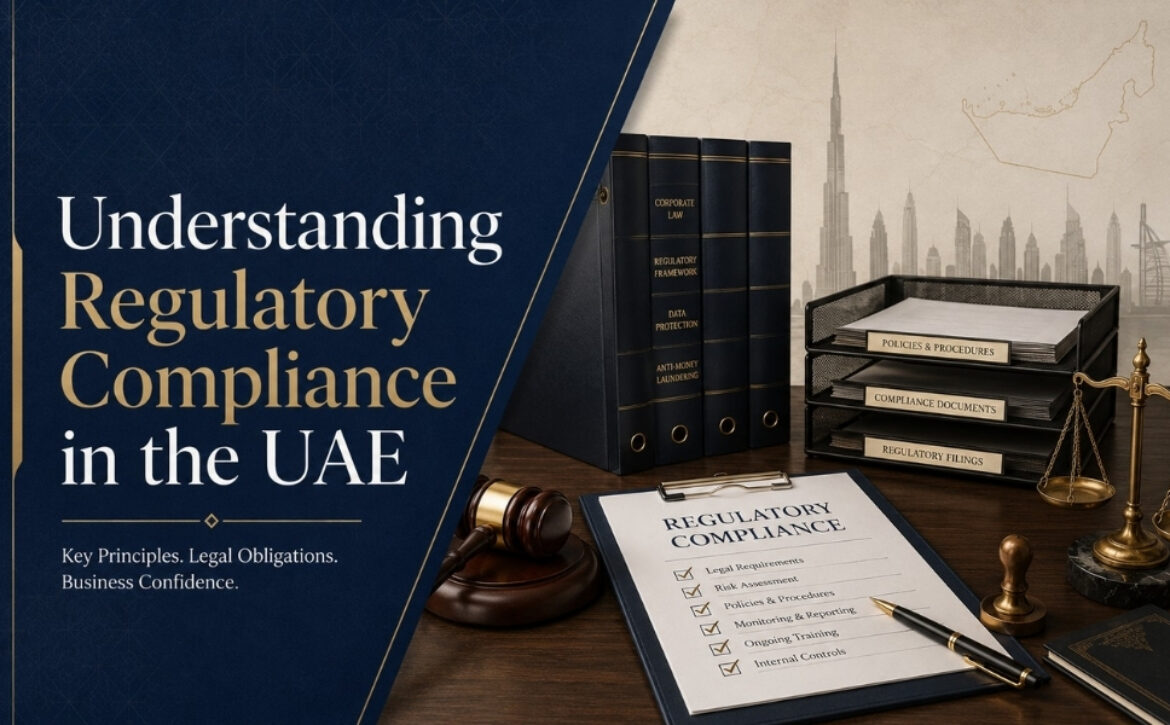
Understanding Regulatory Compliance in the UAE

Understanding Regulatory Compliance in the UAE

The understanding of Regulatory Compliance in the UAE makes businesses ethical in a fast-paced commercial world. Companies from virtually every large industry turn to the UAE to establish themselves. As a result, businesses are required to have an understanding of the rules under which they operate.

Good compliance practices shield businesses from legal, financial, and reputational penalties. Furthermore, compliance develops the ties between customers, investors, regulators, and business partners.

Businesses should approach compliance as a continuous business obligation. Therefore, regular checks and consulting services would lead to continuous progress.

Reasons Why Understanding Regulatory Compliance in the UAE Matters

Understanding Regulatory Compliance in the UAE begins with realizing its significance for business sustainability. Regulations serve as the source of clear principles that undergo responsible implementation in the business world.

Businesses must follow such requirements as those related to employment, taxation, licensing, financial reporting, and data protection. Moreover, certain industries may have additional rules related to compliance.

A good compliance system helps to know an obligation long before a business faces serious risks that exist for its functioning.

Important Areas of Compliance

In the UAE, businesses need to analyze various regulatory areas in order to get a specific understanding of regulatory compliance. It is necessary to understand the rules that apply to specific operations of companies.

Corporate tax and VAT represent significant spheres for a lot of businesses. Enterprises need to ensure compliance with the accounting standards and obligations.

In addition, companies should comply with the licensing procedures that are demanded by business activities. Also, it is essential to check the requirements regarding employment and migration issues. Anti-money laundering regulations are applicable for some types of business. Therefore, it is necessary to implement appropriate controls and reporting procedures.

Tax compliance is an important aspect of understanding regulatory compliance in the UAE. Companies need to know what corporate tax and VAT obligations apply to them.

Good bookkeeping is essential for accurate tax calculations and returns. This means businesses should keep their invoices, expenses, bank statements, and supporting documentation in an orderly manner. Companies also need to pay close attention to filing deadlines. Missing deadlines can lead to excess penalties and problems with administration.

Finally, businesses need to routinely review their taxes periodically. This gives managers a chance to identify mistakes before they submit their tax filings.

Keeping Proper Financial Records

In order to understand Regulatory Compliance in the UAE, good management of financial records is crucial. These records serve as proof for tax submissions and audits. Companies need to keep records of their transactions during the year. Moreover, regular reconciliations enable teams to catch discrepancies early. Digital accounting systems can improve the accuracy and efficiency of reporting. They also provide managers with better insights into financial processes. Nonetheless, companies have to ensure that they set mechanisms for restricting access to financial systems. Strong restrictions can protect confidential information and minimize unauthorized modifications.

Corporate Governance and Internal Controls

Corporate governance enhances the role of Regulatory Compliance in the UAE by promoting accountability. The management needs to allocate functions to different departments. Internal controls are instruments that help companies cut losses from errors, fraud, and unauthorized transactions. Therefore, companies need to put in place processes for approvals and reporting. Regular checks performed by the management are an additional enhancement of adequate financial supervision. Companies can use such checks to find weaknesses in their operations.

In addition, clear policies make the responsibilities of the employees clear to them. Thus, a compliance culture can be enhanced within the company.

Management of Compliance Risks

The comprehension of Regulatory Compliance in the UAE necessitates an ongoing assessment of risks. Regulatory risks may vary as companies evolve and enter new realms of operation. Organizations need to recognize high-risk options and appraise currently existing control measures. Then, management must determine what needs fixing. Compliance reviews put weaknesses on record before the regulators can reveal them. Thus, managing risks in advance can cut down on financial and operational problems. Companies also need to be aware of what is happening in the regulatory world.

The Importance of Technology for Compliance

Increasingly, technology is aiding companies in their understanding of regulatory compliance in the UAE. Modern systems automate the processes of reporting, evidence management, and deadline monitoring. Automation minimizes repetitive administrative work as well as improves accuracy levels. Moreover, modern management systems help track the companies’ compliance actions. The companies can also rely on secure document management systems for important evidence. These systems make retrieval of the documents easy during audits and compliance audits.

On the other hand, technology needs serious management. Businesses need to ensure data security, implement access control, and regularly check cybersecurity measures in their organizations.

Training of Employees and Culture of Compliance

The compliance performance of an organization is highly impacted by the actions of employees. Thus, organizations must conduct periodic training on applicable policies and compliance obligations. Training helps employees identify possible risks and take necessary measures to minimize them. Moreover, good communication minimizes the chances of misunderstandings within the organization. Management should provide incentives to the employees to report any issues or concerns using proper channels. This practice allows for the identification of issues beforehand.

Moreover, the management should also show the example of correct behavior, as strong management influences the attitude of employees towards compliance.

Professional Help for Regulatory Compliance

Regulatory Compliance in the UAE can be difficult due to constantly changing rules. Advisory professionals can help companies interpret the complicated rules. Accountants and compliance specialists can evaluate the company’s report preparation systems and processes. They can identify weaknesses and recommend constructive solutions. Likewise, with the help of the professionals, it becomes easier to ensure tax compliance and prepare for audits. It gives the management more confidence in the performance of important processes.

Nevertheless, the management has to play an active role in this seemingly simple process. A company cannot fully transfer its regulatory responsibility to external advisors.

The advantages of good compliance

Good compliance provides advantages beyond the sole avoidance of sanctions. Organizations become more transparent, financially disciplined, and trusted by stakeholders. Besides, good compliance systems are valuable for expansion, M&A, and investment due diligence. Investors appreciate organizations that are responsible and financially clear. Compliance also ensures operational consistency. When employees work according to procedures, they do their work properly.

In this regard, compliance can be perceived as a competitive advantage rather than mere administrative duties.

The significance of regulatory compliance awareness in UAE businesses cannot be understated as it represents an avenue towards responsible and sustainable growth. Businesses must ensure that they remain up to speed with their tax, financial, governance and operational obligations.

Employing robust internal controls, accurate record-keeping, and necessary employee training will play a critical role in minimizing compliance risk. And, lastly, the use of advanced IT tools and relevant expert advice is crucial in ensuring regulatory preparedness.

In conclusion, businesses should integrate compliance into their day-to-day operations decisions, which will help them protect their business, enhance credibility, and assist in their long-term sustainability in the UAE.

Read More

Corporate Tax Filing Services Starting from AED 500

Corporate Tax Filing Services Starting from AED 500

The Corporate Tax Filing Services starting from AED 500 allows to comply with tax obligations without extra costs. Hence, the right corporate tax compliance in the UAE is categorized as very important.

In order to avoid any penalties or delays in tax returns, businesses should use the services of a corporate tax advisor, who will assist them with reliable compliance.

Why it is Important to Use Corporate Tax Filing Services Starting from AED 500

Corporate Tax Filing Services Starting from AED 500 may become a cost-effective solution for several startups, small and medium-sized enterprises, and large companies in need of high-quality service. The main idea of the Corporate Tax Filing Services is to enable businesses to get the needed help concerning taxation without overpaying for it.

Corporate tax advisors are aware of the changes in the field of taxation and prepare accurate tax returns based on full company financial statements.

Proper Review of Data before Tax Filing

Before filing taxes, you need to have adequate documents ready. You could start by verifying your data; if in doubt, consult professional advisors to be sure about the information you are filing. You will also need to have a proper understanding of your books and past transactions in order to prepare the tax returns properly.

Professional Advisors Verify Data and Calculate Returns

The provided accounting services allow you to be completely sure about the legitimacy of the documents you are going to use for tax return filing. “The correct calculation helps avoid fines and other regulatory issues”.

Best for Startups and SMEs

When launching a business, whether it is a startup or small company, there is often a shortage of money at the beginning. Even with this, everyone must remember to comply with corporate tax regulations. Thus, affordable services help greatly.

Corporate Tax Filing Services starting at AED 500 are, indeed, quite cheap to satisfy the compliance needs of the business. Business owners can approach the experts freely and obtain corporate tax assistance without paying too much for that. This means that small companies do not have to suffer from expenses anymore while still keeping their things under control.

Advantages of Professional Corporate Tax Filing

There are some benefits a company can obtain by using a corporate tax filing service. In addition to ensuring compliance, there can be seen other helpful solutions such as improvement of the accuracy of tax filings and reporting. Moreover, with these services, organizations can alleviate administrative burden.

The experts will provide businesses with answers to questions related to taxes, and they will also provide them with consultation on financial management. The professionals will help companies to make the right choice of financial management for the future.

Selecting the Suitable Tax Filing Partner

There are many tax advisers in the UAE to choose from. It is necessary to select the one who has achieved success in the past and has proven experience in e-filing tax returns in the United Arab Emirates. Advisors should be reliable in retaining data confidentiality even during the tax return submission process. Selecting the right partner is a key factor to ensure successful long-term compliance.

It is also very important to consider such things as pricing transparency, ease of communication with professionals during the filing process, and timely service delivery. Such factors enhance the quality of the filing process and lead to the building of long-lasting relationships with trustworthy tax advisers.

Corporate Tax Filing Services starting from AED 500 offer affordable and reliable tax-filing solutions to companies that work in the UAE. Professional services ensure compliance with the laws and rules and allow getting rid of mistakes. They also save time.

Investing in taxes saves money and ensures the accuracy of accounting and financial results. Thus, investing in professional tax filing is an investment rather than an expense.

Read More