

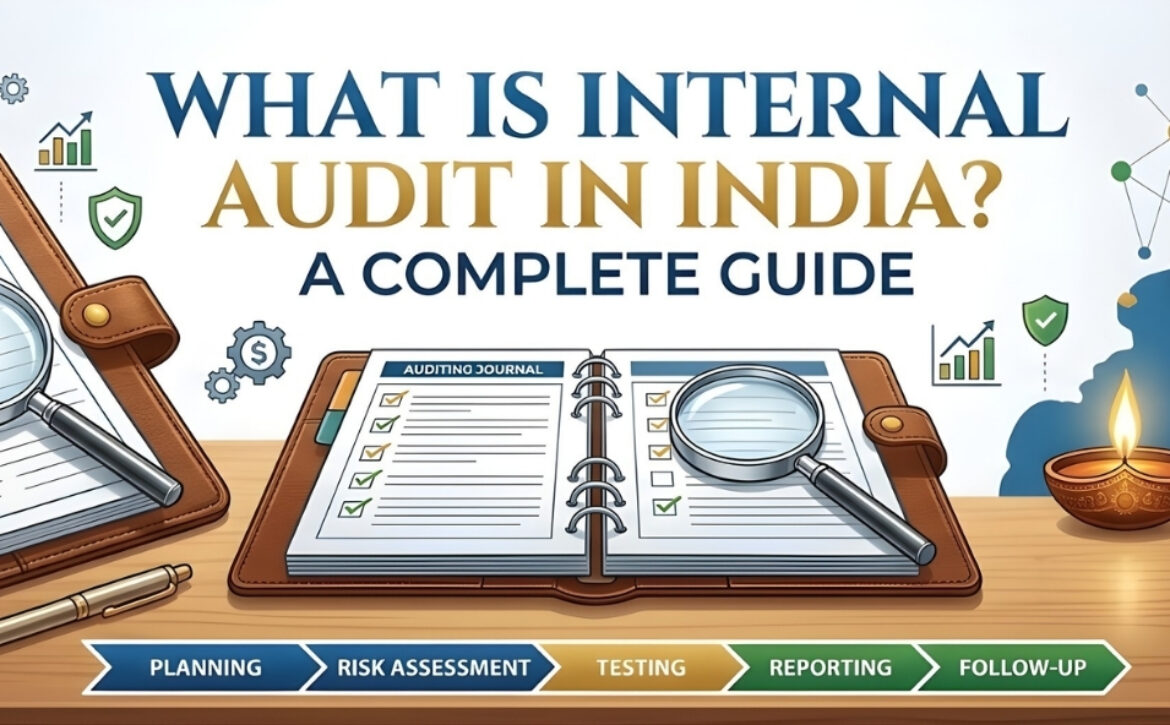
What is Internal Audit in India? A Complete Guide
What is Internal Audit in India? A Complete Guide
What is the Purpose of Internal Audit In India? Giving Insight To Organizations On Financial Control, Compliance With Regulatory Requirements And Monitoring Of Company Risk, Processes, processes, and operations will allow you to ensure that your business is transacting with confidence.
It is critical for companies to regularly assess the risks, processes, and operations of their operations. The effectiveness of having a well-defined internal audit function is to ensure that good business practices are being followed and, therefore, ensure that the organization operates efficiently and effectively.
The ability to make well-informed decisions is an essential part of an organization’s governance process.
Companies in India have significant regulatory burdens placed upon them; as such, a strong internal audit function plays an important role in ensuring compliance and control.
The first thing you will need to know when learning about the internal audit function in India is the definition of the purpose of an internal audit. The internal audit function is responsible for evaluating the internal controls and processes of an organization and conducting periodic reviews of the organization’s financial and operational activities for the purpose of determining whether all aspects of the business are functioning as intended.
The internal audit function identifies areas where an organization can improve its operations through increased efficiency and improved controls, and, as such, an organization is better positioned to maintain an effective governance structure.
Internal Audit (IA) In India: Objectives
As previously mentioned, the key objectives of the internal audit function include:
- To assist organizations in complying with the laws and regulations that impact their respective business operations.
- To ensure the organization is aware of the accuracy and completeness of its financial records.
The internal audit department performs a review of the risk management processes in place on a company’s operations, evaluates the adequacy of the internal control system, and evaluates the operational efficiency achieved for the purpose of evaluating the company’s overall performance and accountability.
Advantages of an Internal Audit
There are numerous advantages provided by the Internal Audit in India. For one, it provides improved internal controls and operational efficiency; hence, businesses will reduce their exposure to errors and risk. Additionally, it increases financial transparency and the accuracy of financial reports, as well as improves compliance with regulations. All these things will enable an organisation to achieve sustainable growth.
Technology’s Role in an Internal Audit
The impact of technology on Internal Audit in India. Digital solutions help to streamline the entire process of accounting and auditing, as well as providing greater accuracy and efficiency among auditors. Automation will greatly reduce the number of manual errors arising from an audit. By using advanced data analytics, auditors can quickly and easily identify any patterns or risks that exist within the organisation; thus, maximising the overall effectiveness of the audit.
Challenges
The common challenges that exist when using Internal Audit in India are discussed within it. All businesses are currently faced with a highly complex regulatory environment due to rapid regulatory change, therefore requiring constant vigilance by businesses to ensure compliance. Also, limited resources have an adverse effect on the overall effectiveness of their audit processes. Furthermore, the lack of expertise can result in incomplete audits; thus, professional assistance is essential.
The Guide for Internal Auditors in India provides a clear direction for organizations wishing to improve their internal auditing processes and systems through risk-based and strategic approaches. As companies begin to implement these approaches, they will begin to realize significant benefits from their internal audit function, including the ability to assess and mitigate risk, maximize business efficiencies, and ensure compliance with laws and regulations.
Internal Auditing will continue to evolve with trends such as the increasing use of artificial intelligence and cloud computing, as well as the ability of companies to utilize the Internet to support their business processes. As a result, organizations will begin to focus on using internal auditors to help improve the company’s overall strategic direction and provide a key component of its infrastructure.
The Guide for Internal Auditors in India provides an excellent foundation to help organizations start their internal auditing process and will remain a valuable resource to help organizations continue to successfully implement and maintain effective internal auditing processes and systems.