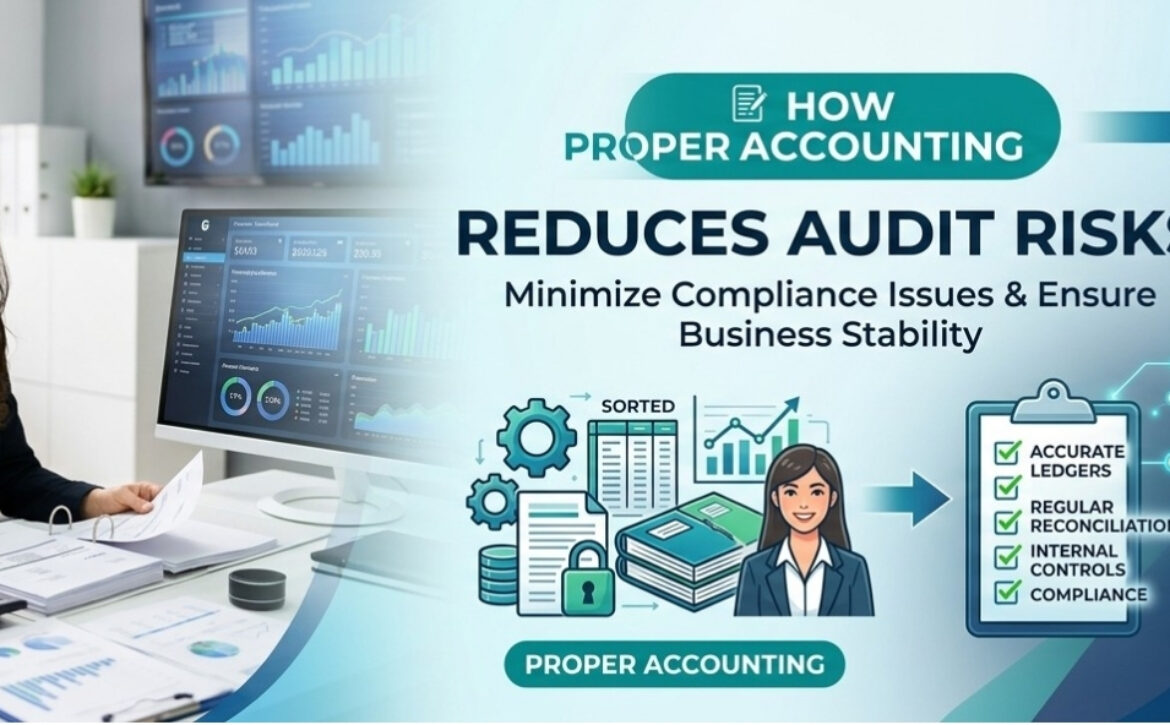
How Proper Accounting Reduces Audit Risks

How Proper Accounting Reduces Audit Risks

How Proper Accounting Reduces Audit Risks, is a key factor for all modern day businesses. Businesses must always keep track of their financial records. Proper accounting will help to avoid any errors and issues dealing with compliance. Proper accounting will also help to increase a business’s financial transparency and control. Due to the strict regulatory environment and the frequent audits businesses in India must contend with, strong accounting practices are a must for audit risk reduction.

Understanding How Proper Accounting Reduces Audit Risks

All businesses must keep an accurate record of all financial transactions. Through proper accounting, businesses will have a clear, organized way to store and access their complete financial information. When a business has clear records will allow an auditor to verify the information associated with the company. When there are clear records, it will help to eliminate discrepancies and confusion. As a result, the audit process will go quicker and smoother.

Financial accuracy and how proper accounting reduces audit risk

How Proper Accounting Reduces Audit Risks ensures that businesses will consistently have accurate financial information. If there are any errors in the accounting records of a business, it will raise concerns for auditors. If there are accurate accounting records, there will be no need for the auditors to review the company’s financial records for more detail than required because the auditor is getting accurate information that supports the company’s financial accuracy. Through proper accounting, any inconsistencies will be found early in the accounting process.

Also, through proper accounting, the company will produce accurate and reliable financial reports. As a result, the company will be able to significantly reduce its audit risk.

Compliance, and how proper accounting reduces audit risk

How Proper Accounting Reduces Audit Risks, helps businesses comply with federal and/or state and local regulations. Businesses must comply with IRS regulations and the financial reporting rules dictated by the GAAP. Through proper accounting, the company will ensure that tax filings and financial reports are accurate.

Keeping accurate records makes it easier for the business to verify compliance and lessen the potential of being penalized. Because of this, a company is able to keep its reputation in good standing with governing bodies.

The Use of Documentation and How Proper Accounting Reduces Auditing Risks

The ways that proper accounting can help to reduce auditing risk depend upon proper documentation. Businesses need to maintain their invoices, receipts, and accurate financial statements; therefore, having organized records will continue to support audit readiness.

Auditors require clear documentation to perform their work; therefore, having properly maintained records will provide them with the evidence needed to perform an audit with confidence.

Internally Maintaining Controls and How Proper Accounting Reduces Auditing Risk

The reduction of auditing risks through proper accounting is enhanced through strong internal controls. Businesses should have an appropriate system of checks and balances in their financial processes so that their internal control system effectively eliminates errors and fraud.

Regular monitoring of your business’s compliance with procedures improves and enhances the level of accountability among the departments of the business; as a result, a business can effectively reduce its auditing risk.

The Use of Technology and How Proper Accounting Reduces Auditing Risk

Accounting technology has increased the level of risk reduction associated with proper accounting practices. Accounting technologies help businesses automate their financial processes very effectively, and therefore, they reduce their manual errors. Cloud computing provides businesses with real-time access to accurate and up-to-date data. Because of this, the consistency of financial reporting through automation further enhances a business’s overall audit readiness.

Internal Controls and How Proper Accounting Reduces Audit Risks

The role of proper accounting in risk management involves improving the efficiency and effectiveness of businesses’ internal operations. They reduce uncertainties and increase transparency/accountability, creating a more efficient system overall. By identifying issues before they emerge, businesses can take corrective steps to address them early and reduce the likelihood of having significant issues later. As a result, they proactively mitigate risk.

Proper accounting provides several benefits to businesses

It improves financial organization and operational efficiency for a business; hence, the business operates in a much more effective and efficient manner. A business will have an increase in the level of trust with its stakeholders and regulators due to improved accounting practices. Proper accounting assists businesses in making better decisions, hence improving their ability to achieve long-term viability.

How Proper Accounting Can Improve Risk Management through Outsourcing.

Outsourcing the accounting function increases the ability of organizations to effectively reduce audit risk. Professional outsourced services assure accuracy and compliance with laws and regulations. As a result, organizations are able to reduce their workload and, consequently, reduce their audit risk. Professional outsourced services maintain records and ensure compliance with laws and regulations. Additionally, they provide valuable insights into the organization’s financial status.

Outsourcing enhances the accounting function in organizations.

The importance of How Proper Accounting Reduces Audit Risks in an organization’s success cannot be understated. Without accurate records, a business cannot demonstrate compliance with applicable laws and regulations. Therefore, businesses must have strong accounting practices in place.

Businesses that have a strong focus on proper accounting provide the foundation for a successful audit and avoid audit-related challenges. Strong accounting practices will provide businesses with a foundation from which they can grow and maintain stability.
Read More

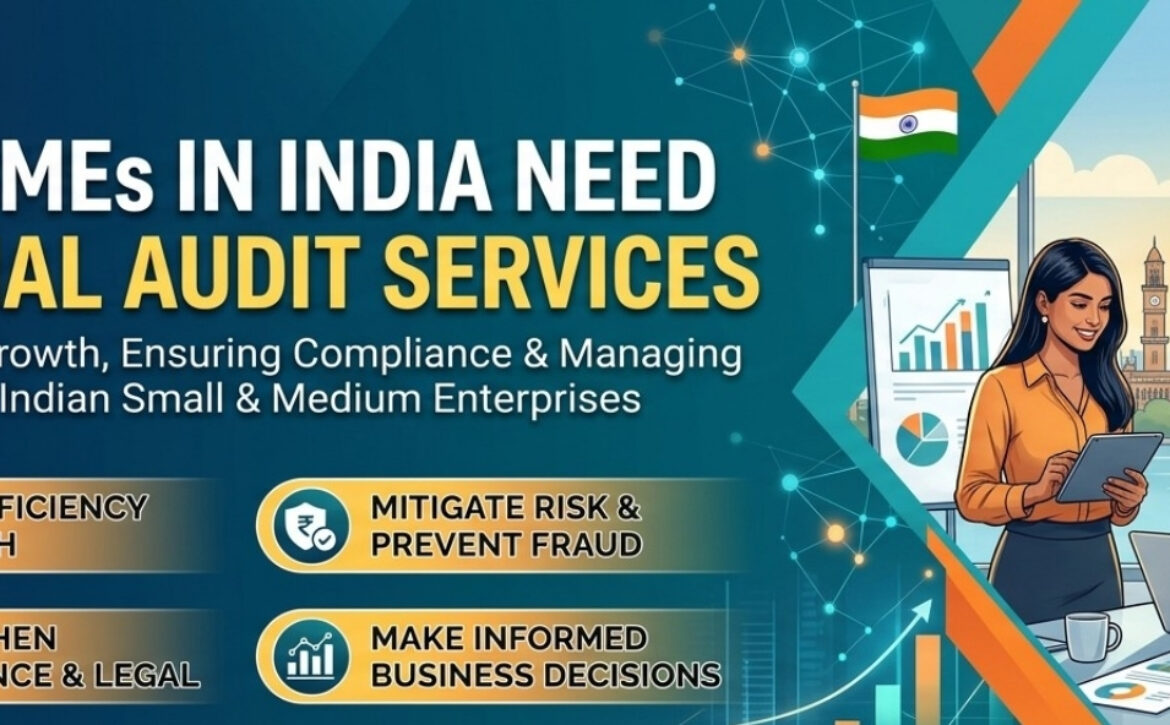
Why SMEs in India Need Internal Audit Services

Why SMEs in India Need Internal Audit Services

Why Internal Audit Services are Important to SMEs in India has become a major area of discussion in today’s competitive marketplace. SMEs need to manage risk and ensure compliance with regulatory requirements as part of their operations. Thus, internal audits can enhance operational control and efficiency. They can assist SMEs in creating a sustainable and profitable business model.

SMEs operate in a complex regulatory and financial environment within India. Consequently, SMEs must develop effective auditing processes to remain competitive in the marketplace.

Understanding the Need for Internal Audit Services for SMEs in India

To effectively communicate the Need for Internal Audit Services for SMEs in India, you must identify the operational problems that SMEs face. Oftentimes, SMEs have limited financial resources and experience financial difficulties when managing their operations.

In addition, performing internal audits allows SMEs to determine if their processes are effective and efficient. By performing an internal audit, SMEs can enhance their operational and financial controls to achieve higher operational performance.

The Relationship Between Risk Management and Why SMEs in India Require Internal Audits

The Need for Internal Audit Services for SMEs in India is directly related to Risk Management. Every time a business performs an operation or transaction, it is exposed to financial, operational, and compliance-related risks.

Thus, internal audits, through evaluating the existence of effective internal control systems, can assist SMEs in identifying risks early on in the process. Auditors assess the process of managing internal controls and make recommendations for improvement. Moreover, auditors continuously evaluate the effectiveness of risk mitigation processes.

Therefore, SMEs can reduce the probability of loss and uncertainty associated with their operations.

Compliance Benefits.

Internal Audit Services are necessary for Indian SMEs to comply with the law. Tax laws and how to report them are required of every SME. Therefore, to ensure they are compliant, SMEs need an internal audit function. Regular internal audits will keep documentation accurate and complete. Will help eliminate the risk of penalties and/or legal issues. This creates confidence and trustworthiness with the authorities.

Financial Accuracy

Internal Audit Services will assist in ensuring financial accuracy and transparency. Errors in the financial record can affect a business’s decision-making. Internal Audit Services will help ensure the accuracy of records. Auditors perform a thorough review of financial statements/transactions. Auditors detect discrepancies & irregularities. Thus, an SME will maintain reliable financial records.

Operational Efficiency

Internal Audit Services will increase operational efficiency. Inefficient processes lead to decreased productivity and increased costs. In that regard, Internal Audit Services will assist in identifying opportunities for operational improvement. Auditors will make recommendations relating to better workflow and/or controls. Auditors will help identify better use of resources. Therefore, an SME will achieve higher operational efficiency and profitability.

Fraud Prevention

Effective Fraud and Why SMEs in India Require Internal Auditor Services why SMEs in India Require Internal Auditor Services helps reduce the risk of being the target of both internal and external fraud and enables SMEs to detect suspicious behaviour early on through the completion of internal auditing. Auditors review and examine financial information (i.e., review records of transactions) for any irregularities or discrepancies while strengthening the company’s internal control system to protect the company’s assets and provide confidence to customers.

Role of Technology in Why SMEs in India Need Internal Audit Services

Why SMEs in India Require Internal Auditor Services encompasses having modern technology. Digital solutions support and improve the internal audit process, resulting in faster, more efficient audits. Automating processes significantly limits the opportunity of making mistakes with manual processes. Data analytics enable you to have deeper insights into your company’s daily operations, thereby maximising the effectiveness of the internal audit.

New Growth Opportunities When Evaluating Why SMEs in India Require Internal Auditor Services

Why SMEs in India Require Internal Auditor Services aids in the development and expansion of your business by providing the foundation on which SMEs can establish/balance their strategies based on data-driven decision-making. Internal Auditors generate valuable and actionable information, which allows you to make informed decisions about growth and potential cost savings. Internal Auditors can also assist with developing strategies for sustained growth for SMEs.

Cost Efficiency and Why SMEs in India Need Internal Audit Service, Accounting and Auditing India

The Importance of Internal Audits for Indian Small and Medium Enterprises. The Value of Internal Audits for SMEs in India increases Cost Efficiency. Poor financial management will create excess costs, and therefore internal audits will help identify cost-effective ways to conduct business, optimising the use of resources, developing better budgets, and improving the discipline of managing the finances of the business. Internally audited businesses will experience an increase in profitability.

The importance of the need for internal audit for an SME – IS India demonstrates how sound financial control creates the means for proper compliance, and increased efficiency and risk management. Hence, the need for SME businesses to employ auditing techniques. Businesses that implement internal audits will further establish themselves and grow more effectively as an SME. Internal audit services support long-term productivity for SMEs in India.

Read More

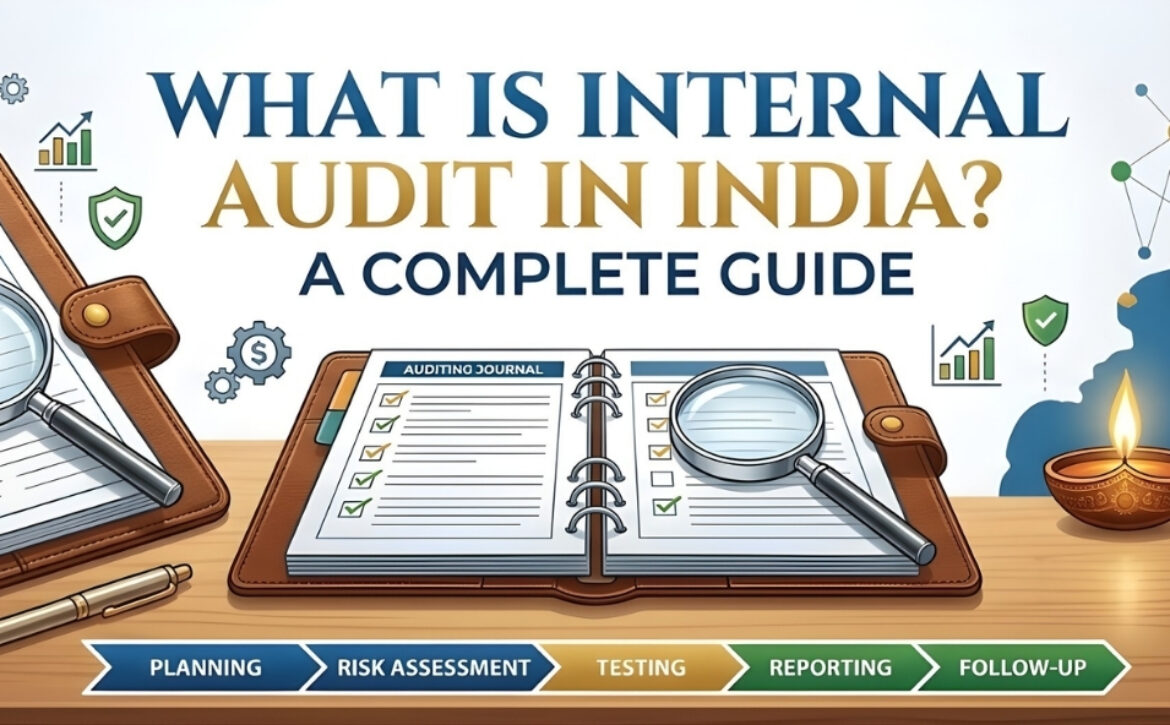
What is Internal Audit in India? A Complete Guide

What is Internal Audit in India? A Complete Guide

What is the Purpose of Internal Audit In India? Giving Insight To Organizations On Financial Control, Compliance With Regulatory Requirements And Monitoring Of Company Risk, Processes, processes, and operations will allow you to ensure that your business is transacting with confidence.

It is critical for companies to regularly assess the risks, processes, and operations of their operations. The effectiveness of having a well-defined internal audit function is to ensure that good business practices are being followed and, therefore, ensure that the organization operates efficiently and effectively.

The ability to make well-informed decisions is an essential part of an organization’s governance process.

Companies in India have significant regulatory burdens placed upon them; as such, a strong internal audit function plays an important role in ensuring compliance and control.

The first thing you will need to know when learning about the internal audit function in India is the definition of the purpose of an internal audit. The internal audit function is responsible for evaluating the internal controls and processes of an organization and conducting periodic reviews of the organization’s financial and operational activities for the purpose of determining whether all aspects of the business are functioning as intended.

The internal audit function identifies areas where an organization can improve its operations through increased efficiency and improved controls, and, as such, an organization is better positioned to maintain an effective governance structure.

Internal Audit (IA) In India: Objectives

As previously mentioned, the key objectives of the internal audit function include:

  • To assist organizations in complying with the laws and regulations that impact their respective business operations.
  • To ensure the organization is aware of the accuracy and completeness of its financial records.

The internal audit department performs a review of the risk management processes in place on a company’s operations, evaluates the adequacy of the internal control system, and evaluates the operational efficiency achieved for the purpose of evaluating the company’s overall performance and accountability.

Advantages of an Internal Audit

There are numerous advantages provided by the Internal Audit in India. For one, it provides improved internal controls and operational efficiency; hence, businesses will reduce their exposure to errors and risk. Additionally, it increases financial transparency and the accuracy of financial reports, as well as improves compliance with regulations. All these things will enable an organisation to achieve sustainable growth.

Technology’s Role in an Internal Audit

The impact of technology on Internal Audit in India. Digital solutions help to streamline the entire process of accounting and auditing, as well as providing greater accuracy and efficiency among auditors. Automation will greatly reduce the number of manual errors arising from an audit. By using advanced data analytics, auditors can quickly and easily identify any patterns or risks that exist within the organisation; thus, maximising the overall effectiveness of the audit.

Challenges

The common challenges that exist when using Internal Audit in India are discussed within it. All businesses are currently faced with a highly complex regulatory environment due to rapid regulatory change, therefore requiring constant vigilance by businesses to ensure compliance. Also, limited resources have an adverse effect on the overall effectiveness of their audit processes. Furthermore, the lack of expertise can result in incomplete audits; thus, professional assistance is essential.

The Guide for Internal Auditors in India provides a clear direction for organizations wishing to improve their internal auditing processes and systems through risk-based and strategic approaches. As companies begin to implement these approaches, they will begin to realize significant benefits from their internal audit function, including the ability to assess and mitigate risk, maximize business efficiencies, and ensure compliance with laws and regulations.

Internal Auditing will continue to evolve with trends such as the increasing use of artificial intelligence and cloud computing, as well as the ability of companies to utilize the Internet to support their business processes. As a result, organizations will begin to focus on using internal auditors to help improve the company’s overall strategic direction and provide a key component of its infrastructure.

The Guide for Internal Auditors in India provides an excellent foundation to help organizations start their internal auditing process and will remain a valuable resource to help organizations continue to successfully implement and maintain effective internal auditing processes and systems.

Read More