Introduction to Taxation in India

Introduction to Taxation in India

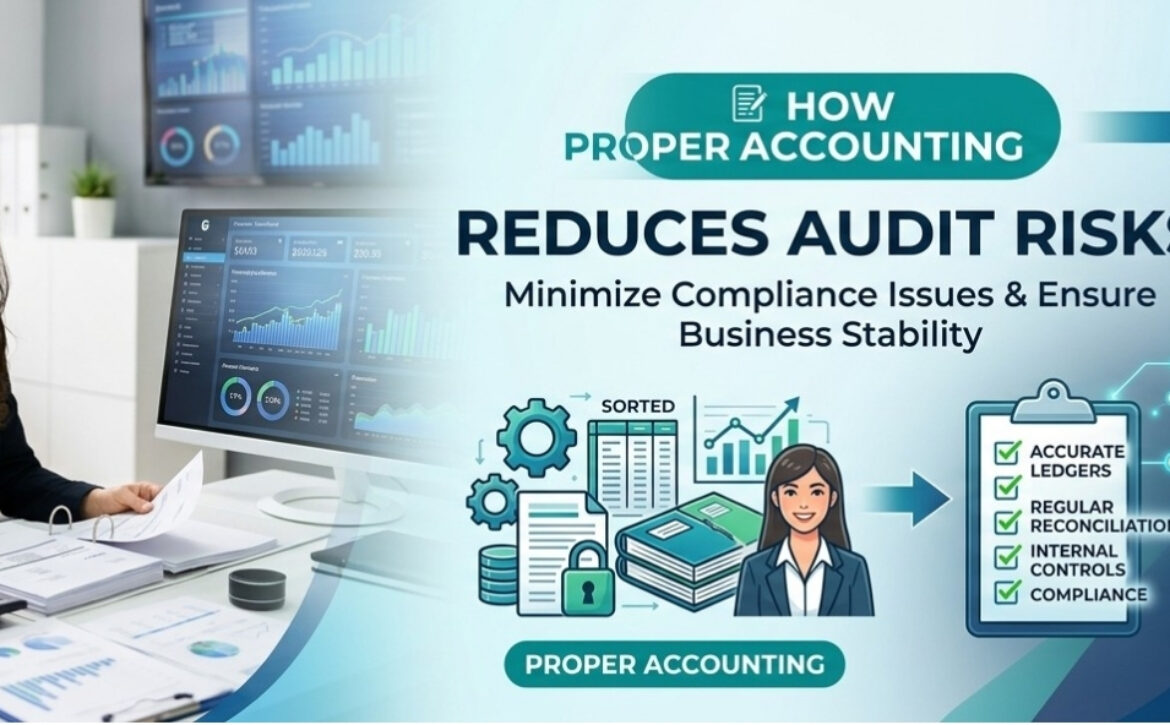
Why Accurate Accounting Reduces Audit Risk is an important concept in today’s world of business. Businesses must ensure that their financial records are accurate at all times. Therefore, in business, accurate accounting is an effective means of preventing errors and compliance problems. Additionally, a business’s ability to have good accounting practices will enable it to increase its financial controls and transparency. The regulatory environment of India has increased regulations, which create pressure on businesses to have strong accounting programs to assist in risk reduction.

How Accurate Accounting Reduces Audit Risk

The first step in How Accurate Accounting Reduces Audit Risk is to create accurate financial records. Every transaction needs to be tracked accurately by a business. Consequently, good accounting practices create organized financial records for businesses. When a business’s financial records are organized and accurate, they provide auditors with easier access to verify the accuracy of the financial statements being audited.

Lastly, the auditors will have fewer discrepancies to resolve, and any confusion regarding the accuracy of the financial records will lead to smoother and quicker audits.

Financial Accuracy and How Accurate Accounting Reduces Audit Risk

How Accurate Accounting Reduces Audit Risk provides consistent financial accuracy. Errors are made in accounting, which can cause concern for auditors regarding the accuracy of the financial statement(s). Accurate accounting will provide an audit with a business owner with accurate accounting records to prevent an audit from taking place. Additionally, good accounting practices help identify discrepancies between actual and projected revenues and expenses consistently.

Lastly, businesses significantly reduce their audit risk when they have good accounting records in place to provide accurate financial reporting.

Compliance and How Proper Accounting Reduces Audit Risks

The way in which proper accounting decreases audit risk, efficient compliance with regulations, is demonstrated through Correct tax law compliance, proper tax reporting compliance, and timely submission of accurate business records in order for a business to successfully file its taxes.

When an organization has accurate and complete records on file that can be used to verify compliance, it reduces its exposure to tax-related fines or penalties imposed by the government, which leads to continued credibility with all levels of government.

Documentation and How Proper Accounting Reduces Audit Risks

Reference to Proper Documentation. Where a business uses proper documentation, the accuracy of the accounting records is dependent on appropriate documentation, as examples of proper documentation include but are not limited to invoices, receipts, and financial statements, which help businesses maintain audit readiness by providing auditors with the required clarity of documentation during their review of business records. It also gives the auditor confidence in their review of the business records.

Internal Controls and How Proper Accounting Reduces Audit Risks

Reference Internal Controls. When a business uses strong internal controls, the effectiveness of its internal controls improves the operation of the accounts payable and receivable processes through checks and balances, which reduces the business’s exposure to errors and decreases the likelihood of fraud.

The organization reviews the effectiveness of its internal controls on a regular basis to ensure that they comply with the organization’s internal policies and procedures, which will in turn serve to enhance accountability across all departments and improve the business’s ability to effectively manage its audit risk.

Using Technology to Reduce Audit Risk

Accounting functions can greatly benefit from advancements in technology. With automated accounting systems, companies are now able to perform financial transactions without creating a significant number of errors. In addition to increasing the speed and efficiency of financial transactions, automated accounting systems provide businesses with current financial information from their cloud-based systems. By using automated systems and cloud-based technologies, businesses have the ability to produce consistent financial reports, which together enhance a company’s readiness for external audits.

Managing Risks Using Proper Accounting

The key to effective risk management is proper accounting practices. On the contrary, when a business has poor or incorrectly written accounting records, it creates uncertainty or risk associated with finances.

To manage risks effectively, businesses must conduct regular financial statement reviews. Conducting regular reviews of a business’s financial records enables businesses to find and resolve issues before they become serious problems. By resolving issues before they become serious, businesses can take proactive measures to prevent the risk of loss associated with the financial statements.

The Benefits of Proper Accounting to Reduce Audit Risk

There are many benefits associated with having proper accounting practices. By having proper accounting practices, businesses are able to organize financial records and improve the operational efficiency of the business, and therefore, businesses will become more functionally successful in the marketplace.

Additionally, businesses that utilize proper accounting practices create a higher level of trust with stakeholders and government agencies and therefore have improved confidence in their ability to make decisions that will result in sustained success.

Using an Outsourcing Service to Reduce Audit Risk

Outsourcing your accounting services to a qualified third party (CPA or accounting firm) can help your business reduce audit risk. The use of outsourced accounting services will provide businesses with professional accountants who can verify and provide accurate financial statements. In addition to improving the accuracy of the financial statements, outsourced accounting firms also allow businesses to reduce the amount of work required to prepare financial statements, significantly improving the overall audit risk associated with an entity.

Proper Accounting Reduces Audit Risk is vital to becoming a successful business. Accurate records provide the necessary basis for maintaining compliance with regulations and transparency.

Accordingly, businesses need to have robust accounting policies. By establishing proper accounting, companies can prevent issues related to audits. Ultimately, sound accounting creates a solid foundation to support their growth and success.

Read More

How Proper Accounting Reduces Audit Risks

How Proper Accounting Reduces Audit Risks

How Proper Accounting Reduces Audit Risks, is a key factor for all modern day businesses. Businesses must always keep track of their financial records. Proper accounting will help to avoid any errors and issues dealing with compliance. Proper accounting will also help to increase a business’s financial transparency and control. Due to the strict regulatory environment and the frequent audits businesses in India must contend with, strong accounting practices are a must for audit risk reduction.

Understanding How Proper Accounting Reduces Audit Risks

All businesses must keep an accurate record of all financial transactions. Through proper accounting, businesses will have a clear, organized way to store and access their complete financial information. When a business has clear records will allow an auditor to verify the information associated with the company. When there are clear records, it will help to eliminate discrepancies and confusion. As a result, the audit process will go quicker and smoother.

Financial accuracy and how proper accounting reduces audit risk

How Proper Accounting Reduces Audit Risks ensures that businesses will consistently have accurate financial information. If there are any errors in the accounting records of a business, it will raise concerns for auditors. If there are accurate accounting records, there will be no need for the auditors to review the company’s financial records for more detail than required because the auditor is getting accurate information that supports the company’s financial accuracy. Through proper accounting, any inconsistencies will be found early in the accounting process.

Also, through proper accounting, the company will produce accurate and reliable financial reports. As a result, the company will be able to significantly reduce its audit risk.

Compliance, and how proper accounting reduces audit risk

How Proper Accounting Reduces Audit Risks, helps businesses comply with federal and/or state and local regulations. Businesses must comply with IRS regulations and the financial reporting rules dictated by the GAAP. Through proper accounting, the company will ensure that tax filings and financial reports are accurate.

Keeping accurate records makes it easier for the business to verify compliance and lessen the potential of being penalized. Because of this, a company is able to keep its reputation in good standing with governing bodies.

The Use of Documentation and How Proper Accounting Reduces Auditing Risks

The ways that proper accounting can help to reduce auditing risk depend upon proper documentation. Businesses need to maintain their invoices, receipts, and accurate financial statements; therefore, having organized records will continue to support audit readiness.

Auditors require clear documentation to perform their work; therefore, having properly maintained records will provide them with the evidence needed to perform an audit with confidence.

Internally Maintaining Controls and How Proper Accounting Reduces Auditing Risk

The reduction of auditing risks through proper accounting is enhanced through strong internal controls. Businesses should have an appropriate system of checks and balances in their financial processes so that their internal control system effectively eliminates errors and fraud.

Regular monitoring of your business’s compliance with procedures improves and enhances the level of accountability among the departments of the business; as a result, a business can effectively reduce its auditing risk.

The Use of Technology and How Proper Accounting Reduces Auditing Risk

Accounting technology has increased the level of risk reduction associated with proper accounting practices. Accounting technologies help businesses automate their financial processes very effectively, and therefore, they reduce their manual errors. Cloud computing provides businesses with real-time access to accurate and up-to-date data. Because of this, the consistency of financial reporting through automation further enhances a business’s overall audit readiness.

Internal Controls and How Proper Accounting Reduces Audit Risks

The role of proper accounting in risk management involves improving the efficiency and effectiveness of businesses’ internal operations. They reduce uncertainties and increase transparency/accountability, creating a more efficient system overall. By identifying issues before they emerge, businesses can take corrective steps to address them early and reduce the likelihood of having significant issues later. As a result, they proactively mitigate risk.

Proper accounting provides several benefits to businesses

It improves financial organization and operational efficiency for a business; hence, the business operates in a much more effective and efficient manner. A business will have an increase in the level of trust with its stakeholders and regulators due to improved accounting practices. Proper accounting assists businesses in making better decisions, hence improving their ability to achieve long-term viability.

How Proper Accounting Can Improve Risk Management through Outsourcing.

Outsourcing the accounting function increases the ability of organizations to effectively reduce audit risk. Professional outsourced services assure accuracy and compliance with laws and regulations. As a result, organizations are able to reduce their workload and, consequently, reduce their audit risk. Professional outsourced services maintain records and ensure compliance with laws and regulations. Additionally, they provide valuable insights into the organization’s financial status.

Outsourcing enhances the accounting function in organizations.

The importance of How Proper Accounting Reduces Audit Risks in an organization’s success cannot be understated. Without accurate records, a business cannot demonstrate compliance with applicable laws and regulations. Therefore, businesses must have strong accounting practices in place.

Businesses that have a strong focus on proper accounting provide the foundation for a successful audit and avoid audit-related challenges. Strong accounting practices will provide businesses with a foundation from which they can grow and maintain stability.

Read More

Why SMEs in India Need Internal Audit Services

Why SMEs in India Need Internal Audit Services

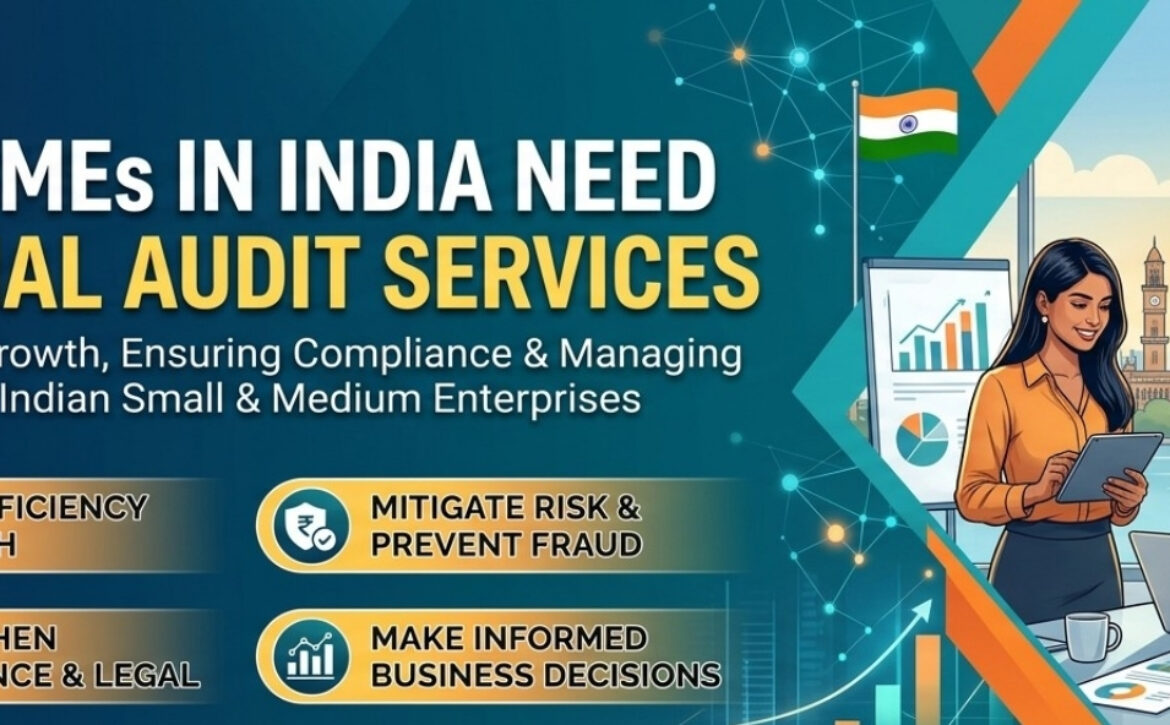
Why Internal Audit Services are Important to SMEs in India has become a major area of discussion in today’s competitive marketplace. SMEs need to manage risk and ensure compliance with regulatory requirements as part of their operations. Thus, internal audits can enhance operational control and efficiency. They can assist SMEs in creating a sustainable and profitable business model.

SMEs operate in a complex regulatory and financial environment within India. Consequently, SMEs must develop effective auditing processes to remain competitive in the marketplace.

Understanding the Need for Internal Audit Services for SMEs in India

To effectively communicate the Need for Internal Audit Services for SMEs in India, you must identify the operational problems that SMEs face. Oftentimes, SMEs have limited financial resources and experience financial difficulties when managing their operations.

In addition, performing internal audits allows SMEs to determine if their processes are effective and efficient. By performing an internal audit, SMEs can enhance their operational and financial controls to achieve higher operational performance.

The Relationship Between Risk Management and Why SMEs in India Require Internal Audits

The Need for Internal Audit Services for SMEs in India is directly related to Risk Management. Every time a business performs an operation or transaction, it is exposed to financial, operational, and compliance-related risks.

Thus, internal audits, through evaluating the existence of effective internal control systems, can assist SMEs in identifying risks early on in the process. Auditors assess the process of managing internal controls and make recommendations for improvement. Moreover, auditors continuously evaluate the effectiveness of risk mitigation processes.

Therefore, SMEs can reduce the probability of loss and uncertainty associated with their operations.

Compliance Benefits.

Internal Audit Services are necessary for Indian SMEs to comply with the law. Tax laws and how to report them are required of every SME. Therefore, to ensure they are compliant, SMEs need an internal audit function. Regular internal audits will keep documentation accurate and complete. Will help eliminate the risk of penalties and/or legal issues. This creates confidence and trustworthiness with the authorities.

Financial Accuracy

Internal Audit Services will assist in ensuring financial accuracy and transparency. Errors in the financial record can affect a business’s decision-making. Internal Audit Services will help ensure the accuracy of records. Auditors perform a thorough review of financial statements/transactions. Auditors detect discrepancies & irregularities. Thus, an SME will maintain reliable financial records.

Operational Efficiency

Internal Audit Services will increase operational efficiency. Inefficient processes lead to decreased productivity and increased costs. In that regard, Internal Audit Services will assist in identifying opportunities for operational improvement. Auditors will make recommendations relating to better workflow and/or controls. Auditors will help identify better use of resources. Therefore, an SME will achieve higher operational efficiency and profitability.

Fraud Prevention

Effective Fraud and Why SMEs in India Require Internal Auditor Services why SMEs in India Require Internal Auditor Services helps reduce the risk of being the target of both internal and external fraud and enables SMEs to detect suspicious behaviour early on through the completion of internal auditing. Auditors review and examine financial information (i.e., review records of transactions) for any irregularities or discrepancies while strengthening the company’s internal control system to protect the company’s assets and provide confidence to customers.

Role of Technology in Why SMEs in India Need Internal Audit Services

Why SMEs in India Require Internal Auditor Services encompasses having modern technology. Digital solutions support and improve the internal audit process, resulting in faster, more efficient audits. Automating processes significantly limits the opportunity of making mistakes with manual processes. Data analytics enable you to have deeper insights into your company’s daily operations, thereby maximising the effectiveness of the internal audit.

New Growth Opportunities When Evaluating Why SMEs in India Require Internal Auditor Services

Why SMEs in India Require Internal Auditor Services aids in the development and expansion of your business by providing the foundation on which SMEs can establish/balance their strategies based on data-driven decision-making. Internal Auditors generate valuable and actionable information, which allows you to make informed decisions about growth and potential cost savings. Internal Auditors can also assist with developing strategies for sustained growth for SMEs.

Cost Efficiency and Why SMEs in India Need Internal Audit Service, Accounting and Auditing India

The Importance of Internal Audits for Indian Small and Medium Enterprises. The Value of Internal Audits for SMEs in India increases Cost Efficiency. Poor financial management will create excess costs, and therefore internal audits will help identify cost-effective ways to conduct business, optimising the use of resources, developing better budgets, and improving the discipline of managing the finances of the business. Internally audited businesses will experience an increase in profitability.

The importance of the need for internal audit for an SME – IS India demonstrates how sound financial control creates the means for proper compliance, and increased efficiency and risk management. Hence, the need for SME businesses to employ auditing techniques. Businesses that implement internal audits will further establish themselves and grow more effectively as an SME. Internal audit services support long-term productivity for SMEs in India.

Read More

Role of Bookkeeping in Tax Compliance

Role of Bookkeeping in Tax Compliance

Tax Compliance has an important role for all businesses that do business in today’s highly regulated financial environment. To meet their tax requirements, companies are required by law to keep accurate financial records. Bookkeeping facilitates completing accurate tax filings that happen on time.
In addition, good bookkeeping practices mitigate risks associated with penalties and audits.

In India, businesses must comply with a significant number of strict tax regulations and a set of defined tax reporting requirements. Therefore, solid bookkeeping practices lead to tax compliance and proper financial disclosures.

Understanding the Role of Bookkeeping in Tax Compliance.

The Role of Bookkeeping for Tax Compliance begins with having organized financial data. Bookkeeping utilizes a system of records to organize financial transactions into basic categories, i.e., to record revenue, expenses, and money transaction streams. As a result of having organized records, businesses can quickly determine the amount of taxable income they have generated.

In addition, organized financial records simplify tax calculations and reporting so that businesses can effectively comply with tax regulations. The Role of Bookkeeping in Tax Compliance plays a critical role in providing financial accuracy. Errors in bookkeeping will result in inaccurate tax filings and, therefore, less risk of errors through good bookkeeping.

Accurate financial records contribute to reliable tax reporting and the ability to identify legitimate tax deductions and tax benefits. Therefore, good bookkeeping allows for the legal optimization of tax consequences.

GST and the Role of Bookkeeping in Tax Compliance

The part that bookkeeping plays in ensuring accurate and correct compliance with GST is critical in managing your GST obligations.
All businesses need to accurately report all sales and purchase transactions in their books of account to ensure that they file accurate GST returns.

Accurate recordkeeping will allow a business to reconcile the input tax credit with its GST liabilities on its GST return.
Accurately maintained records will also prevent a business from being subject to mismatches and compliance issues, which could result in penalties and late fees being imposed on the business.

Documentation and the Role of Bookkeeping in Tax Compliance

Bookkeeping, as it relates to tax compliance, also involves keeping all documentation in the business’s records.
The business must keep all invoices, receipts, and financial statements to have their records properly maintained and be audit-ready.

All businesses require appropriate documentation during a tax audit to have proof of what has been reported to the tax authority, and also to create a level of credibility with compliance with the tax authority.

Timely Filing and the Role of Bookkeeping in Tax Compliance

The role of bookkeeping in tax compliance will assist in ensuring that all taxes are submitted to the tax authority on time.
The business must have all returns and payments made on or before the due dates established by the tax authorities to remain compliant. Therefore, regular and accurate recordkeeping is required to avoid last-minute errors.

Consistent bookkeeping practices will provide a business with the necessary current financial information to prepare its tax returns expeditiously and accurately, and result in ongoing compliance.

Technology and the Role of Bookkeeping in Tax Compliance

Automating recordkeeping through accounting software provides faster, easier ways to keep track of all the things you need to report to the IRS, and can save time by automating calculations. Therefore, you will have fewer manual errors. Cloud-based systems give you access to updated financial information anytime you need it and allow you to have accurate tax returns using automated connections. Therefore, technology will help make it easier for you to comply with IRS regulations.

Risk Management and the Role of Bookkeeping in Tax Compliance

Inadequate bookkeeping can defend your company against an audit or impose a fine; therefore, having a good system of record-keeping shows that you are a transparent organization with enough control. Periodic reviews allow for the correction of mistakes or inconsistencies as soon as possible. Your company’s internal controls will promote accuracy in financial records, which will reduce your compliance risk.

Advantages of the Function of Bookkeeping in Tax Compliance

There are many reasons why an effective system of recordkeeping will provide a benefit to your business regarding tax compliance.

Good bookkeeping will provide an effective financial organizational structure and create increased operational efficiency for your business, and will help you to manage your tax obligations promptly. It also allows you to increase your credibility with both the IRS and your stakeholders, thereby enhancing your company’s ability to financially plan for the future and subsequently achieve long-term success.

Outsourcing and the Role of Bookkeeping in Tax Compliance

Outsourcing is a critical element in the area of accounting services, and bookkeeping is central to tax compliance. Outsourcing your bookkeeping creates an environment where you can be assured of accuracy and compliance. Additionally, your business will gain time and resources through this partnership. The accounting professional will continue to update themselves on the new regulations and requirements imposed by the Internal Revenue Service. In addition, they can make meaningful recommendations to help your company improve upon current processes.

As you can see, outsourcing can also add to your overall compliance process.

Your company requires the assistance of a bookkeeper to achieve successful tax compliance. You can only submit accurate records to the IRS through a properly organized bookkeeping system. As such, you must place a high priority on the bookkeeping aspect of your business. Failure to maintain accurate records may subject your company to potential fines and penalties. Ultimately, the foundation for achieving tax compliance lies within your bookkeeping system.

Read More

Importance of Bookkeeping for Small Businesses

Importance of Bookkeeping for Small Businesses

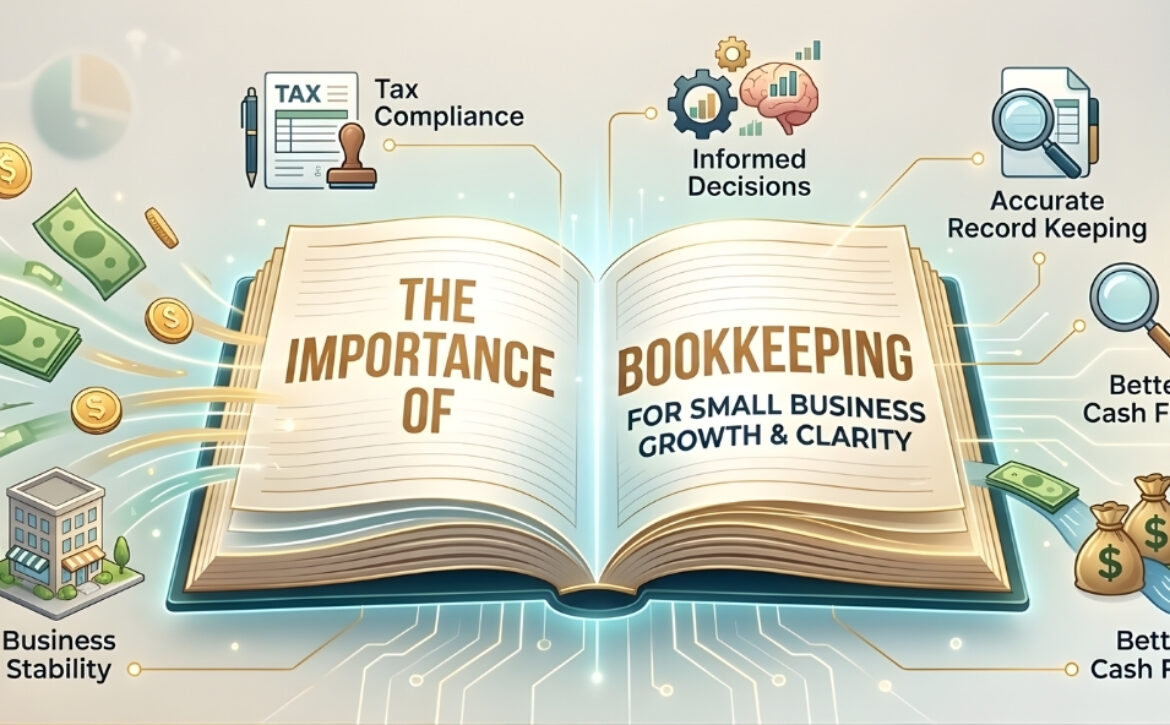
The Importance of Bookkeeping for Small Businesses is more prominent now than ever due to the competitive nature of the modern-day environment. Every firm must be able to accurately document its financial status to remain in business and continue to grow. Through bookkeeping, small business owners obtain control, clarity, and long-term financial stability. Furthermore, through bookkeeping, small business owners can make quick and informed decisions.

Understanding the Importance

Small businesses typically operate under a constrained budget and physical resources. Therefore, having established procedures for bookkeeping is imperative for managing their financial affairs effectively. The first step to understanding bookkeeping’s benefits for small businesses is establishing organized financial records.

Bookkeeping is nothing more than documenting every financial transaction that takes place in an organized manner. By systematically documenting all of a company’s transactions, a small business owner can have a comprehensive view of the company’s revenues and expenditures.

The necessity of maintaining accurate records can provide a greater level of transparency in the company’s finances. Having accurate records can assist in measuring the company’s performance over a time period, thus allowing company owners to run their businesses at their best potential to maximum efficiency.

Financial Accuracy

Bookkeeping is crucial for small businesses as it ensures accurate financial records. Errors in transactions can lead to serious issues, so a consistent bookkeeping system helps minimize discrepancies. Using good records to produce accurate and reliable financial information leads to establishing trends and patterns of cost, thereby increasing the efficiency of the day-to-day operations of the small business.

Cash Flow Management

Cash flow management has been heavily impacted by the way bookkeeping assists small businesses with their overall cash flow management. Small business owners need to monitor their incoming and outgoing cash regularly. As a result, proper bookkeeping helps keep the company in good standing financially.

When cash flow is tracked regularly through bookkeeping, it helps to keep businesses from running out of cash or having delays in making payments to suppliers or employees. Therefore, small businesses are able to maintain financial stability.

Tax Compliance

Bookkeeping plays a critical role in supporting small business owners when preparing their tax returns in a timely and accurate manner. In order for small business owners to accurately prepare their tax returns, they must use properly kept books.

Bookkeeping helps to reduce the possibility of errors when preparing tax returns by providing well-organised records that can be used for reference. Additionally, small businesses will be able to avoid penalties and threats of litigation as long as their bookkeeping records are kept properly. As a result, bookkeeping helps maintain compliance and credibility for small business owners.

Decision-Making

When it comes to making decisions, bookkeeping allows small business owners to make more informed decisions. Small business owners use financial data when developing a business plan and developing a strategy, which requires accurate financial records. Because of this, small business owners can gain valuable insights from their accurate records.

Financial reports can help small business owners identify areas that are profitable and areas that are not working, which will guide them to make more informed pricing management, budgeting, and investment decisions in the future. This will enable small businesses to achieve a greater level of success than they would have without the use of effective small business bookkeeping.

How Technology Is Helping Small Businesses Grow

The growing use of digital tools increases the importance of bookkeeping for small businesses. New accounting software greatly reduces the difficulty of doing bookkeeping tasks. This means that businesses can reduce human error and save time because they won’t be entering data manually.

Cloud-based systems allow for real-time updates to financial data. Automation allows for accurate and quick reporting. This makes financial management easier because it uses technology to help.

Reducing Financial Risk Of Bookkeeping For Small Businesses

The importance of bookkeeping for small businesses is essential in reducing the risk of financial loss. If you do not keep your records properly and accurately, you leave yourself open to potential fraud or mismanagement. So having the proper systems in place will give you the ability to be more accountable and transparent.

By having periodic reviews of your business’s financial status, you can detect errors or irregularities in your business’s financial records sooner rather than later. With the addition of internal controls to your business, you can improve your overall financial security. This, in turn, allows you to better safeguard your assets.

Growth Of Bookkeeping For Small Businesses

The importance of bookkeeping for a small business is necessary to support its long-term growth. By having accurate financial data, businesses have the ability to create an expansion plan. As a result, you will be able to allocate resources in an efficient manner. Investors and lenders will want to see accurate financial statements. When you have proper accounting records, you will increase your chances of being able to obtain funding from investors and lenders.

Outsourcing and The Need for Small Business Bookkeeping Increases With the Utilization Of Professional Assistance. An outsourced provider will decrease the amount of work you have to do while also ensuring that your work is being done correctly. Outsourcing allows you to concentrate on your main functions as a business.

Professional bookkeepers will ensure that your company is complying with all financial regulations and that your company is being properly managed financially. In addition, they will provide insight into how your company can grow, so as to ultimately be more efficient and reliable.

Small businesses rely on bookkeeping to be successful. Bookkeeping provides financial accuracy, compliance, and a way to plan. As a result, all companies should make bookkeeping a priority. Companies have a greater chance for stability and growth when they keep accurate financial records. Adequate bookkeeping lays the groundwork for a successful business long-term.

Read More

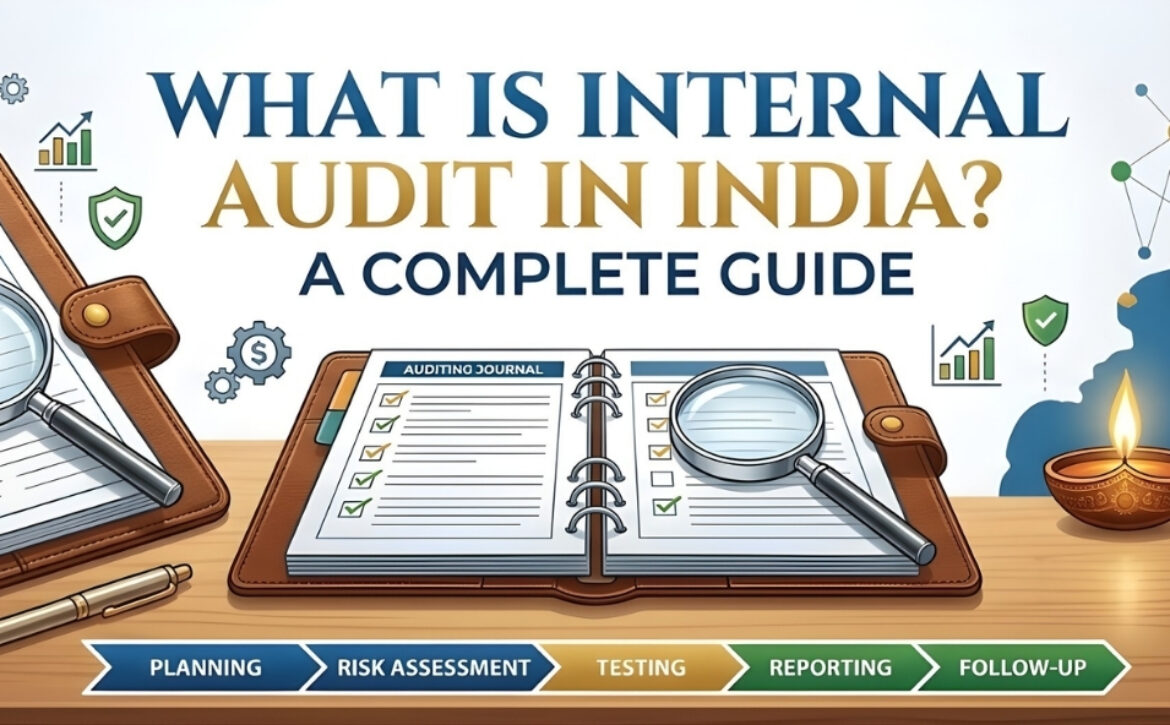
What is Internal Audit in India? A Complete Guide

What is Internal Audit in India? A Complete Guide

What is the Purpose of Internal Audit In India? Giving Insight To Organizations On Financial Control, Compliance With Regulatory Requirements And Monitoring Of Company Risk, Processes, processes, and operations will allow you to ensure that your business is transacting with confidence.

It is critical for companies to regularly assess the risks, processes, and operations of their operations. The effectiveness of having a well-defined internal audit function is to ensure that good business practices are being followed and, therefore, ensure that the organization operates efficiently and effectively.

The ability to make well-informed decisions is an essential part of an organization’s governance process.

Companies in India have significant regulatory burdens placed upon them; as such, a strong internal audit function plays an important role in ensuring compliance and control.

The first thing you will need to know when learning about the internal audit function in India is the definition of the purpose of an internal audit. The internal audit function is responsible for evaluating the internal controls and processes of an organization and conducting periodic reviews of the organization’s financial and operational activities for the purpose of determining whether all aspects of the business are functioning as intended.

The internal audit function identifies areas where an organization can improve its operations through increased efficiency and improved controls, and, as such, an organization is better positioned to maintain an effective governance structure.

Internal Audit (IA) In India: Objectives

As previously mentioned, the key objectives of the internal audit function include:

  • To assist organizations in complying with the laws and regulations that impact their respective business operations.
  • To ensure the organization is aware of the accuracy and completeness of its financial records.

The internal audit department performs a review of the risk management processes in place on a company’s operations, evaluates the adequacy of the internal control system, and evaluates the operational efficiency achieved for the purpose of evaluating the company’s overall performance and accountability.

Advantages of an Internal Audit

There are numerous advantages provided by the Internal Audit in India. For one, it provides improved internal controls and operational efficiency; hence, businesses will reduce their exposure to errors and risk. Additionally, it increases financial transparency and the accuracy of financial reports, as well as improves compliance with regulations. All these things will enable an organisation to achieve sustainable growth.

Technology’s Role in an Internal Audit

The impact of technology on Internal Audit in India. Digital solutions help to streamline the entire process of accounting and auditing, as well as providing greater accuracy and efficiency among auditors. Automation will greatly reduce the number of manual errors arising from an audit. By using advanced data analytics, auditors can quickly and easily identify any patterns or risks that exist within the organisation; thus, maximising the overall effectiveness of the audit.

Challenges

The common challenges that exist when using Internal Audit in India are discussed within it. All businesses are currently faced with a highly complex regulatory environment due to rapid regulatory change, therefore requiring constant vigilance by businesses to ensure compliance. Also, limited resources have an adverse effect on the overall effectiveness of their audit processes. Furthermore, the lack of expertise can result in incomplete audits; thus, professional assistance is essential.

The Guide for Internal Auditors in India provides a clear direction for organizations wishing to improve their internal auditing processes and systems through risk-based and strategic approaches. As companies begin to implement these approaches, they will begin to realize significant benefits from their internal audit function, including the ability to assess and mitigate risk, maximize business efficiencies, and ensure compliance with laws and regulations.

Internal Auditing will continue to evolve with trends such as the increasing use of artificial intelligence and cloud computing, as well as the ability of companies to utilize the Internet to support their business processes. As a result, organizations will begin to focus on using internal auditors to help improve the company’s overall strategic direction and provide a key component of its infrastructure.

The Guide for Internal Auditors in India provides an excellent foundation to help organizations start their internal auditing process and will remain a valuable resource to help organizations continue to successfully implement and maintain effective internal auditing processes and systems.

Read More

Future of Account Bookkeeping in India

Future of Account Bookkeeping in India

In the prospect of Account Bookkeeping in India is an example of the evolution of methods for managing finances in businesses. Companies are transforming the way they manage, record, and organize their accounting information due to rapidly moving advances in technology.

As such, organizations are turning to modern bookkeeping systems to achieve enhanced productivity and accuracy in performing their bookkeeping duties. Businesses in India are increasingly reliant on using digital technology to manage their financial affairs.

As a result, bookkeeping is quickly changing from paper-based processes to automated systems for carrying out financial transactions.

Technology and The Future Of Account Bookkeeping In India

The future of Account Bookkeeping In India has a significant reliance on the use of technology. Businesses are implementing cloud-based accounting programs to provide easy access to and better organization of their accounting data.

As a result, businesses can now monitor their transactions and maintain their accounting records on a real-time basis. Automation also allows for a reduction in repetitive tasks and decreases in human errors associated with performing accounting functions. Digital platforms also enhance the collaboration of accountants and business owners.

Therefore, technological advances are improving the accuracy and productivity of financial management.

Automation Trends In The Future Of Account Bookkeeping In India

The Future of Account Bookkeeping In India will continue to experience increasing levels of automation across accounting functions. Currently, many businesses are employing artificial intelligence to classify their financial transactions automatically.

Therefore, accountants are being allowed to concentrate an increased amount of their time on providing financial analysis and conducting strategic business planning.

In addition, automated systems can provide instant generation of a business’s financial reports. This capability will provide greater transparency for businesses as well as improve the overall ability to monitor business performance. Consequently, automation will also lead to an increase in the productivity of the accounting profession.

Future Account Bookkeeping (India) Compliance & Regulation

The future of bookkeeping in India will require rigorous compliance with financial regulations. There is a clear demand for accurate reporting and transparency in accounting for businesses, which means they must keep organized and current financial records.

Digital bookkeeping simplifies the complexities of managing compliance. Digital bookkeeping allows businesses to track tax obligations and deadlines, allowing them to minimize the risk of penalties or audits.

Cloud Accounting Future of Bookkeeping (India)

Future bookkeeping in India will be more cloud-based than ever before. A cloud-based financial system provides businesses with access to their financial data securely, from anywhere. This has greatly enhanced their ability to be flexible and to operate efficiently.

Real-time updates create opportunities for accurate financial tracking and monitoring. Cloud-based solutions also offer secure data backups. This provides businesses with better protection of their financial record against data loss or cyber-attacks.

Future of Accountants in Bookkeeping (India)

The role of accountants and their focus on bookkeeping in India will change dramatically going forward. Accountants will place greater emphasis on advisory services and financial analysis; therefore, accountants will play a critical role in the overall strategic planning of the business.

Accountants interpret financial data to assist businesses in making decisions. Their expertise helps businesses to increase profitability and mitigate risk. As a result, accountants will continue to be integral partners in the growth of the business.

Account Bookkeeping in India: Future for Small Businesses

The future of bookkeeping in India has the potential to significantly assist small and medium-sized enterprises. Digital bookkeeping services help growing companies with their ability to manage their finances; therefore, this allows SMEs to decrease their administrative and operating cost burden.

Quality, inexpensive accounting software includes many valuable features for day-to-day bookkeeping. As a result, this enables entrepreneurs to gain greater insight into and control of their respective finances.

Furthermore, through enhanced financial discipline and better financial planning, small businesses can improve their financial health.

Data Protection in the Future of Bookkeeping in India

The future of bookkeeping in India focuses on data protection. Many businesses keep their financial data in digital systems that contain sensitive information.

As such, businesses must put proper cybersecurity measures into place. Financial data can be protected by encrypted data and secure backup procedures. Additionally, regular system monitoring will identify any possible threats to that data early on.

This will allow businesses to continue operating while maintaining their credibility.

Integration with Other Business Systems

The future of bookkeeping in India will bring about the integration of accounting (bookkeeping) systems with other operational business systems. Most of the accounting (bookkeeping), inventory, payroll, and sales systems being used today are linked.

Thus, this integration will ensure that financial records are always consistent. By integrating these systems, businesses will be able to eliminate double data entry. By integrating systems together, businesses will be able to produce complete financial information far more quickly, which will allow for better and more efficient decision-making.

Skill Development For The Future Of Account Bookkeeping In India:

Professional development via continuous skill development is essential to accounting’s future. Accountants must utilize digital tools and utilize increasingly sophisticated technology tools. Thus, there are numerous training programs available to assist professionals in developing skills.

In response to the growth of technology, many educational institutions now offer technology-specific accounting courses to help professional accountants prepare for the financial markets of the future. As a result, today’s workforce is better equipped to meet the changing demands of bookkeeping processes.

Future Opportunities for the Future Of Account Bookkeeping In India:

The future of accounting will have numerous opportunities for many accountants. Digital transformation will fuel the growing demand for bookkeeping professionals who possess the skills necessary to operate in a rapidly changing world. Thus, accounting professionals with experience and knowledge of technology will have competitive job advantages.

Accounting professionals will additionally have many opportunities available to be consultants or advisors in business financial planning. This growing demand will create new accounting positions, as bookkeeping continues to evolve into a more strategic and innovative profession.

The future of bookkeeping in India will emphasize the movement from traditional bookkeeping to digital and automated financial management. Bookkeepers’ use of technology, compliance, and their professional knowledge will be the driving force behind this transformation. Therefore, in order for businesses to succeed, they will need to learn how to implement modern-day bookkeeping processes.

Businesses that are willing to innovate will create a more efficient and transparent financial management system, and ultimately, the future of bookkeeping in India will support long-term, sustainable growth of businesses.

Read More

UAE Tax Incentives 2026

UAE Tax Incentives 2026

The UAE Tax Incentives 2026 provide various strategic benefits for businesses operating in the UAE. The UAE has developed as a significant centre of global investment. So, tax incentives and allowances provide advantages to businesses to encourage continuing growth in the economy. Businesses must acknowledge the benefits available via the UAE Tax Incentives 2026, so they are able to maximise both profits and compliance.

The UAE Government aligns its incentives to support investment, innovation, diversification and global standards. As a result of these incentives, companies have many opportunities to legally reduce their tax liabilities.

What Are UAE Tax Incentives 2026

The UAE Tax Incentives 2026 programme provides tax incentives to businesses in many industries. The UAE Government has created tax incentives to promote investment and to create jobs.
All businesses should carefully consider the eligibility criteria associated with each incentive. Tax incentives may take the form of tax exemptions, tax relief and preferential tax rates. Each of these incentives is available under certain conditions and circumstances. A comprehensive understanding of the tax incentives provided by the UAE Tax Incentives 2026 will facilitate the implementation of an appropriate tax planning strategy.

UAE Tax Incentives 2026 provide various reliefs under the Corporate Tax framework that are available to Corporations and SMEs (small and medium-sized enterprises). Specifically, the threshold limits for MSMEs will result in reduced compliance, thus lowering the burden of compliance on MSMEs. The carry forward allowance of losses will aid in a corporation’s ability to recover and grow, as Corporates will be able to offset future profits against their previously incurred losses. Therefore, the relief will provide increased stability in cash flow.

Free Zone Benefits and UAE Tax Incentives 2026

It also maintains the benefits for eligible Corporations in Free Zone areas. However, a free zone entity must comply with the requirements of economic substance. Therefore, the business must have an operational ‘presence’ in the free zone. UAE Tax Incentives 2026 also provide a preference by providing eligible Corporations with preferential tax treatment on qualifying income; however, Corporations that do not meet the qualification criteria will be taxed at the standard Emirate Income Tax rates. This creates segregation of income by providing compliance and a continuance of the tax incentive(s).

Research and Innovation Incentives

In an effort to promote innovation and the development of technology, the UAE Tax Incentives 2026 encourage businesses to adopt research or research-model-based business through the availability of tax deductions for innovation.

Corporations that are primarily focused on technology will continue to have long-term strategic advantages through the innovation incentive. Using innovation incentives will provide support for Corporations to continue to grow their businesses while remaining aligned with national priorities. It will bring international investors to the UAE for tax-efficient markets.

Foreign Investment and Tax Incentives

The UAE has an extensive network of double tax treaties. Therefore, businesses that operate outside their home country will have less exposure to tax through cross-border operations.

The UAE’s investment incentives give investors confidence to enter new markets. The clear regulations provide the ability for businesses to operate transparently. As a result, many investors have chosen to base their regional headquarters in Dubai.

Economic Substance’s Role in 2026 Incentives Eligibility

The UAE’s Tax Incentives for 2026 match the benefit of the incentives with the true economic activity of the company. To be able to retain the incentive, a company must show that they have local management and operations. Shell companies do not qualify for the incentives since they don’t have real local management or operations.

The substance requirements of the incentives help create an environment of real businesses being established and operating in the UAE. This also increases the credibility of the UAE’s regulatory and taxation systems. As a result of these requirements, companies that are committed to developing their business in the UAE will receive more benefits than those that are only using the UAE as a conduit to their real business in another country.

Compliance and Documentation Requirements

The UAE’s Tax Incentives for 2026 require that companies document and report their records accurately, as well as to have accurate financial records. Therefore, companies require robust accounting systems.

The authorities expect that there will be consistency in the information reported in the tax return and in the financial statements. It is important to remember that if there is incomplete documentation, the company could lose the ability to claim the incentives. A regular review process will help to close compliance gaps.

Tax Planning Strategies for 2026

UAE’s Tax Incentives for 2026 can be very useful in creating an effective tax plan for a company. It is recommended that companies evaluate their corporate structures and operations on an annual basis. If a company starts to develop its tax planning early, it can take full advantage of the tax benefits.

Businesses are encouraged to work with professional advisors to help them evaluate the continuously changing regulations. By working with a professional, businesses can avoid the misinterpretation or penalties that can occur if they do not fully understand the regulations. As a result, businesses will have a strategic advantage when planning their taxes.

UAE Tax Incentives 2026

Tax incentives in the UAE in 2026 offer opportunities for businesses, but navigating complex eligibility requirements can be challenging. Companies may struggle with application processes and risk non-compliance if they use incorrect procedures or documents, potentially missing financial rewards.

Continually monitoring and adapting to the new regulatory changes will require commitment and due diligence on the part of the company, while partial compliance will result in reduced benefits. Therefore, sound governance of all tax compliance and reporting will be essential to ensure that companies are in a position to obtain timely compliance with the Incentives.

Preparing Your Business to Qualify for UAE Tax Incentives 2026

Preparing for and assessing tax incentive opportunities in the UAE, 2026 will be a proactive initiative for your company as you begin to conduct incentive eligibility reviews to maximise incentives that may be available to you.

Training finance team members on the various tax incentives will enhance the knowledge of these team members and allow for accurate reporting. Technology will help your company report accurately by providing the tools necessary to remain ready to obtain tax incentives.

Long-Term Benefits of UAE Tax Incentives 2026

Accessing the UAE’s tax incentives for 2026 will help to ensure long-term sustainability for your company by establishing a lower tax liability, which will allow your company to reinvest significantly. Businesses will have more confidence as they expand their business operations.

Incentives will boost investor confidence and market reputation, promoting growth through partnerships and joint ventures. UAE tax incentives in 2026 will foster strong, sustainable business ecosystems. UAE Tax Incentives 2026 offer substantial savings for compliant companies. Understanding these incentives provides a strategic advantage, and early planning minimises risks, increasing profitability. Companies that act early with proper guidance will benefit most from tax incentives and support sustainable growth in 2026 and beyond.

Read More

Future of Accounting in Dubai

Future of Accounting in Dubai

As technology evolves, the Future of Accounting in Dubai will also change. Traditionally focused on numbers, accounting will increasingly integrate into strategy, compliance, and decision-making. Dubai is striving to be an international business centre. Therefore, accounting processes must keep pace with the rapid pace of innovation and regulation.

Accounting Processes: Future of Accounting in Dubai Using Advanced Technology

The Future of Accounting in Dubai will utilise new and advanced technology. For example, through artificial intelligence and robotic process automation (RPA), companies automate routine and time-consuming functions, thus reducing human error and increasing productivity. Accountants will be able to devote more time to analytical and advisory tasks, rather than manual data entry.

Additionally, cloud-based accounting solutions provide users with the benefit of being able to access financial records at any point in time. This flexibility enables business owners to make informed and timely financial decisions, thus providing greater control over business operations.

Artificial Intelligence is the Future of Accounting

As accountants adopt new technologies, artificial intelligence will be crucial for the future of accounting in Dubai. AI can quickly and accurately process data, helping businesses identify trends and risks efficiently. AI-based fraud detection programs enable early fraud detection, protecting financial statements. Businesses can also use predictive analytics to forecast cash flow and expenses, improving cash management.

Efficiency through Automation

Automation improves along the accounting processes, allowing businesses to become more efficient in their operations. Automation has enabled many businesses to process more routine activities of the accounting process, such as invoicing, payroll, and/or reconciliations, in an automated fashion, saving them money on their operational expenses.

In addition to supporting compliance through timely reporting cycles, automated reporting enables the company to produce reports quickly, giving its customers an easy way to meet their obligations.

Statements made today about the Future of the Accounting Profession in Dubai will be driven by Digital Transformation and Cloud Accounting Technologies.

Digitalised Workflows using Cloud Platforms

The Digital Transformation of the accounting profession has enabled the way in which the accounting profession operates to change significantly. Cloud-based accounting solutions facilitate the ability for teams to collaborate and work together to deliver accurate and secure data from any location.

Adopting Cloud Technology enables the future of the accounting profession in Dubai to provide scalability and flexibility. The future of the accounting profession will no longer be restricted by reliance upon manual systems and paper-based records.

Cloud-Based solutions will help create an improved level of audit readiness for auditors. They will have immediate secure access to all the current records being maintained in real-time.

Compliance and Regulatory Alignment Enhanced

The accounting regulatory environment in Dubai is continuing to change and evolve, requiring accountants to be in full compliance with Corporate Tax, VAT, and ESG (Environmental, Social, and Governance) Reporting.

Accounting Systems must be updated to enable accountants to be fully compliant with existing and future regulatory requirements. The future of the accounting profession in Dubai is to have built-in compliance monitoring functions integrated into Digital Technology Solutions. Automated error alerts and notifications of impending deadlines provide accountants with a means of reducing the risk of penalties and audits.

Support for the Small and Medium Enterprise (SME) and Startup Sector in Dubai.

Entrepreneurs and Start-Ups from across the globe are attracted to Dubai. Many of these businesses need flexible, affordable, and easily accessible forms of accounting support. Digital Accounting Solutions provide for all of these requirements.

Automation and Outsourcing help support the growth of a small business by reducing costs while remaining compliant. Cloud-based systems allow SMEs to grow quickly and easily, and scale their operations.

Connecting the Accounting Process to Other Parts of the Business

The ability for Accounting Software to connect with Inventory Systems, HR Systems, and Customer Relationship Management Systems has allowed for a Higher Degree of Data Accuracy Across Departments. As a result, Management has a Comprehensive Financial Overview.

Through data driven Decision-Making, the connection of these systems will allow for increased Overall Efficiency in the Operating Environment.

Skill Sets Required for Future Accounting Professionals

As Technology continues to advance, so too must the Skills of Accountants. Accountants must now possess the skills necessary to utilise technology (e.g., Digital Literacy) and Analyse Data. Continuous Learning will allow them to remain relevant in today’s Business Environment.

The Future of Accounting in Dubai – Employers Will Value Accountants who understand Technological Developments and Regulatory Requirements.

Advantages to Businesses in Dubai who adopt Digital Accounting Systems.

Businesses that implement Digital Accounting Systems can benefit by Improved Financial Data Quality; Reducing Operating Costs; Insuring Compliance with Regulations, and Having Faster Response to Market Changes.

The Future of Accounting in Dubai Supports the Achievement of Sustainable Growth By Improving Financial Control and Building Investor Confidence through Transparent Financial Reporting.

Anticipating Tomorrow

Every business should evaluate its accounting methods today. Investing in automation and cloud technologies now is imperative. Training employees is also essential for a seamless transition.

The Regulation of Tomorrow’s Accounting in Dubai will favour organisations that take initiative. These organisations increase their chances of realising efficiency and resilience, as well as being strategically advanced, compared to those that wait to invest in these technologies.

The Future of Accounting in Dubai will rely upon AI, automation, and digital transformation. By leveraging these things, businesses will create new ways to manage finances. The use of technology will result in improved accuracy, compliance, and strategic insight into what is happening. Businesses that leverage digital accounting solutions remain viable and are on the path to remaining compliant while also setting themselves up for future success. Making changes today will prepare you for the future of accounting in Dubai.

Read More

UAE Forensic Accounting Services

UAE Forensic Accounting Services

Globally, Fraud and accounting irregularities continue to disrupt the stability of businesses. Companies must take steps to preserve their Financial Integrity and Transparency. UAE Forensic Accounting Services protects organizations from fraud by identifying irregularities, preventing inaccuracies, and ensuring regulatory compliance.

What is a Forensic Accountant in the Constitution of the UAE – A Forensic Accountant?

Combining the experience of an accountant with investigative techniques, forensic accountants identify and report any instance of a company engaging in fraudulent activity and all suspicious transactions. Forensic accountancy services in the UAE review records of an organization to reveal and detect any fraud that the organization may commit. The findings resulting from the Forensic Accountant’s examinations result in providing support to a business during disputes or Audits or Regulatory Investigations.

Forensic Accountants perform an essential role in the development of any Available Evidence that is legally acceptable in court. Their examination techniques must be performed with the Highest Standards of Accuracy to maintain the Objectivity and Legality of the Findings.

The importance of the UAE Forensic Accounting Service to a Business is that as it grows, it becomes more complicated and has the potential for Greater Financial Risk and Greater Opportunities for Fraud to occur. The identification of potential Fraud needs to be done proactively to ensure that a business is Sustainable.

With the increase in regulatory authorities requiring more Accountable and Transparent Financial Reporting. If a business fails to identify its financial risks, it may result in penalties and or damage to its Reputation. The UAE Forensic Accountant will assist a business in compliance and in maintaining Stakeholder Confidence.

Common Types of Fraud Risk Facing UAE Businesses

Fraud can occur at any level of an organization. The most common types of fraud include misappropriation of assets and misstated financial statements. Companies in the UAE may also face threats from Payroll fraud and Vendor Manipulation.

Fraud can remain undetected for long periods sometimes, which is why UAE Forensic Accounting Services utilizes Data Analysis to detect suspicious transactions. Their investigation techniques can help identify inconsistencies that may not be detected by a standard audit.

How Technology Assists in Forensic Accounting in the UAE

The use of technology has a tremendous impact on modern-day forensic accounting investigations. Through advanced analytics, it is possible to identify transactions that differ from the norm in a short amount of time. The use of digital tools by UAE Forensic Accounting Services allows them to process thousands, if not millions, of records at a speed and with unprecedented accuracy.

In addition, forensic accounting experts can accurately trace electronic and digital payments and production records. They can also recover deleted data as well as monitor for system vulnerabilities. The result is that the assistance of technology allows for greater speed and accuracy in forensic accounting investigations.UAE Forensic Accounting Services

Helping with Legal and Regulatory Actions

Many times, financial disputes that arise in business can turn into legal disputes. Courts need reliable financial evidence to render a decision. UAE Forensic Accounting Services provides Expert Reports for Litigation Support.

Additionally, forensic accountants can provide their expertise as an Expert Witness. They can explain their findings to a judge and jury in a way that is easy for them to understand, which helps support the case and increase the likelihood of a positive outcome.

Supporting the Improvement of Internal Control with Forensic Accounting

The reduction of fraud risk can be accomplished to a large degree through the implementation of strong internal controls. Unfortunately, there are many companies that have weak internal control systems. UAE Forensic Accounting Services evaluates company internal controls and recommends opportunities for improvement.

In order for businesses to minimize the risk of future fraud, both process improvements and separation of duties are recommended. Furthermore, establishing better approval and documentation standards will increase the chance of preventing fraudulent activity. Long-term advantages of utilizing Forensic Accounting services in the UAE include improved financial transparency and operational discipline, as well as protection of both the assets and reputation of the business.

Businesses can detect fraud earlier, reducing financial losses and compliance risks, thus boosting stakeholder confidence. Sectors like banking, real estate, trading, healthcare, and manufacturing face significant fraud risk and need ongoing monitoring

Family-owned businesses can also benefit from having a forensic accounting professional involved in their operations, especially about succession or restructuring issues, to provide the owner(s) with a clear understanding of the business’s financial position.

Therefore, the services of Forensic Accounting are valuable for businesses of every size.

UAE Forensic Accounting Services: Choosing the Right Forensic Accounting Partner

When selecting a forensic accounting partner, the selected partner must have previous experience working in the UAE. As the regulatory environment in the UAE varies from that in other parts of the world, having local regulatory knowledge will be vital to ensuring that the forensic accounting service provider complies with all applicable laws and standards and best meets the specific needs of the client’s industry.

Another important consideration in selecting a forensic accounting partner is confidentiality and ethical conduct. The forensic accounting partner must be reliable and able to maintain objectivity and discretion to ensure the accuracy of the investigation and the resultant findings.

Fraud prevention entails the need for vigilance and professionalism. Some methods for addressing fraud often use a reactive approach, which results in financial loss as well as damage to the company’s reputation. UAE Forensic Accounting Services provides businesses with a proactive defence and investigative capability.

By employing these methods, businesses are able to discover occurrences of fraud, take proper legal recourse and provide improved governance. Additionally, they assist in developing improved internal controls and enforcing a higher level of financial discipline. Through the implementation of forensic accounting practices, organizations can convert a previously negative facet of fraud prevention into a positive strategic business advantage.

Read More