05 Aug
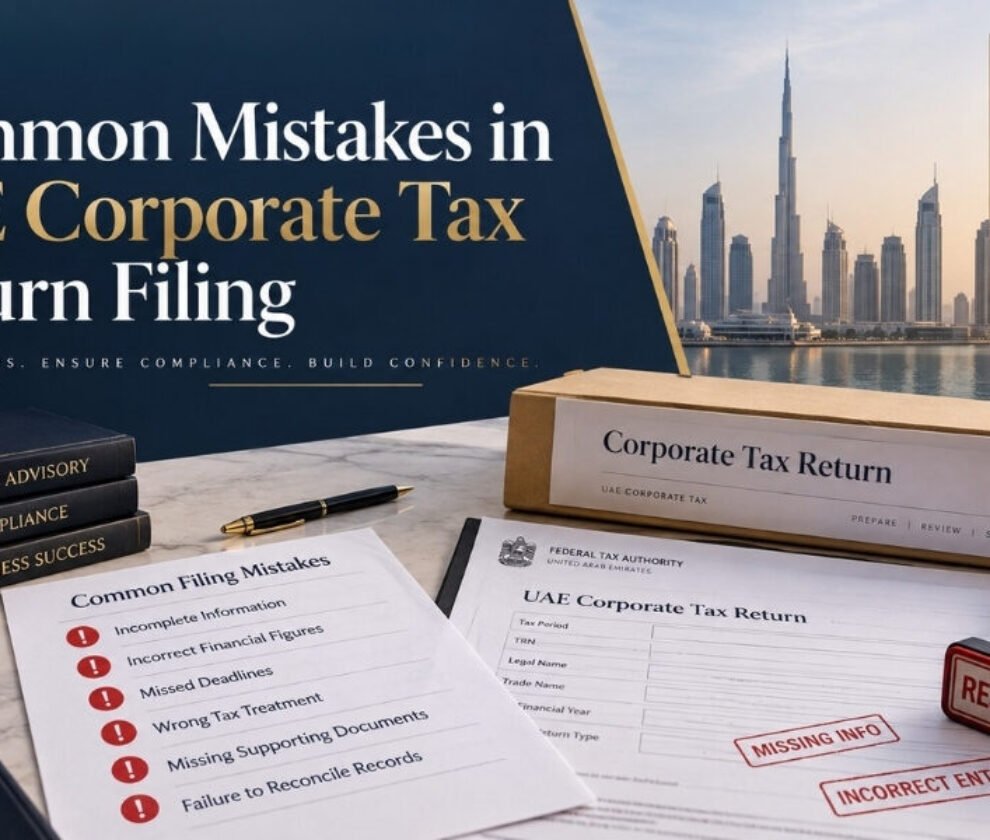
Common Mistakes to Avoid During Corporate Tax Filing
Every business needs to be aware of the frequent mistakes in corporate tax filing, since a lack of knowledge can lead to unfavorable consequences. Businesses need to maintain accuracy, plan wisely, and keep relevant records when it comes to tax compliance.
Many organizations tend to commit unnecessary blunders due to carelessness in regulations and poor bookkeeping practices. This can result in penalties, audits, and financial losses.
Understanding Common Mistakes to Avoid During Corporate Tax Filing
The earliest mistake to be highlighted here about corporate tax filings is that people don’t prepare in advance for the process. In most cases, companies do not take the necessary measures until the deadline approaches. Last-minute corporate tax filings can lead to an increase in mistakes that are very costly.
It is essential to keep financial records throughout the year. The activity of bookkeeping helps with higher accuracy in future tax filings and makes the reporting process easier.
Maintaining Inaccurate Financial Records
Among the Common Mistakes to Avoid When Filing Corporate Income Taxes is poor bookkeeping. It is necessary for accounting records to accurately reflect every transaction. Thus, a business must record its earnings regularly.
The absence of invoices and inaccuracies in bookkeeping may lead to errors. Such mistakes may generate a regulatory review or audit of the company. Hence, the business must perform the reconciliation of accounts periodically.
Missing Corporate Tax Deadlines, Incorrect Tax Calculations
One of the Common Mistakes to Avoid During Corporate Tax Filing is ignoring deadlines. Every business must be well aware of the relevant deadlines. Therefore, organizations should make their tax calendars and reminders.
Delays in filing often cause penalties that could harm the company’s compliance reputation. Thus, timely submission ensures the financial stability of the company.
Ignoring Supporting Documentation
One of the Common Mistakes to Avoid During Corporate Tax Filing is ignoring deadlines. Every business must be well aware of the relevant deadlines. Therefore, organizations should make their tax calendars and reminders.
Delays in filing often cause penalties that could harm the company’s compliance reputation. Thus, timely submission ensures the financial stability of the company.
Misclassifying Business Expenses
Expense categorization has a direct impact on taxable income. Common errors to avoid when filing corporate taxes are incorrect expense classification. Companies should distinguish between personal and business expenses.
Additionally, it is important to classify allowable expenses correctly so that tax returns are accurate.
Overlooking Tax Law Updates
Corporate taxation regulations are an ongoing development. A very common mistake in corporate taxation filing is ignoring changes in regulation.
Businesses have to stay vigilant about changes in taxation regulations. They should also revise their accounting practices when needed, so that they comply with tax rules.
Professionals assist companies in understanding their compliance issues, thus eliminating their doubts.
Failing to Review Tax Returns
Corporate taxation regulations are an ongoing development. A very common mistake in corporate taxation filing is ignoring changes in regulation.
Businesses have to stay vigilant about changes in taxation regulations. They should also revise their accounting practices when needed, so that they comply with tax rules.
Professionals assist companies in understanding their compliance issues, thus eliminating their doubts.
Depending on Manual Accounting Processes
Cumbersome bookkeeping raises chances of inaccuracies. Regular errors while carrying out Corporation Tax filing come about mainly due to obsolete accounting practices.
With the launch of modern accounting applications, the entire calculation and reporting process has become automated. Additionally, digital solutions have made record management more efficient, thus raising business effectiveness and lowering compliance risks.
Neglecting Internal Controls
Robust internal controls ensure correct tax reporting. Typical errors avoided in corporate filing are weak approval and review processes.
Business organizations must define solid financial responsibility. Duty segregation also minimizes mistakes in reporting. This thus leads to better accountability in finances.
Regular internal audits help organizations discover weaknesses in a timely. Organizations can deal with problems before submitting tax reports.
Not Seeking Professional Guidance
Numerous companies try complicated tax filings without professional guidance. Typical mistakes made in corporate tax filing include, among others, confusing complex tax rules.
Professional tax experts understand rules perfectly. They can also discover planning prospects and compliance issues. This way, companies increase the accuracy and efficacy of their filings.
Professional advice saves time during tax season. As a result, companies are able to concentrate on their business operations while specialists take care of regulatory compliance.
Building a Better Corporate Tax Process
Companies need to have tax compliance processes in place. By having a reliable bookkeeping system, accurate information is available every time there is an incoming request.
Technology has made it easier to report tax information and improved efficiency. Staff training has led to higher knowledge of compliance processes among the employees. Furthermore, periodic internal audits help eliminate mistakes in filings.
When companies invest in constructing tax compliance processes, they achieve better control over their financial operations. Furthermore, they ensure that there is nothing wrong with their relationship with their stakeholders and regulators.
When it comes to filing corporate taxes, negligence in planning, keeping data, and meeting the deadlines may lead to Common Mistakes to Avoid During Corporate Tax Filing. Thankfully, preparation and strict financial management can help businesses do away with these errors.
Effective bookkeeping, timely filing, and proper consultation improve compliance levels and minimize financial risks. Taking these steps ensures that businesses operate efficiently, and should they face audits, their compliance level will be high.
Business Tax Compliance Dubai Common Mistakes to Avoid During Corporate Tax Filing Corporate Tax Compliance UAE Corporate Tax Filing Dubai Corporate Tax Filing Mistakes Corporate Tax Planning UAE Corporate Tax Return UAE Dubai Tax Filing Guide SlickAndSharp SlickAndSharp Finance Tax Advisory Dubai Tax Planning Dubai UAE Corporate Tax UAE Corporate Tax Filing